Showing posts with label Judicial Duels. Show all posts
Showing posts with label Judicial Duels. Show all posts
Thursday, May 23, 2013
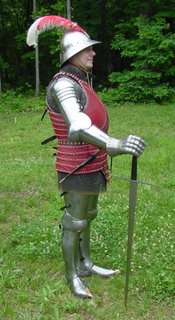
Reconstruction of a Judicial Duel, c. 1410
Freelance Academy Press sponsored a session at this year's Kalamazoo Congress on Medieval Studies: a paper by Greg Mele on the judicial duel, followed by a reconstruction of a judicial duel performed by members of the Chicago Swordplay Guild and La Belle Compagnie. The script is here. Here are the cartellos. Here is a gallery of photos from the Kalamazoo Gazette.
From about the fifteen minute mark of the first video, when we aren't speaking you can hear the pick-up plainchant choir from down the hall.

Thursday, May 09, 2013
Script for a Judicial Duel
Narrator:
In the
first place, the quarrels and the bills of the appellant and of the defendant have
been posted in the court before the constable and the marshal.
And
when they could not prove their cause by witnesses or by any other manner, but
needed to determine their quarrel by strength, the one to prove his intent upon
the other and the other in the same manner to defend himself, the constable had
power to join the battle as vicar general under God and his lord.
The
battle conjoined by the constable, he assigned them a day and place, so that
the day be not within forty days after the said battle so conjoined, unless it
be by the consenting of said appellant and defendant. Then he awarded them
points of arms otherwise called weapons. Either of them would have, that is to
say, lance, long sword, and dagger.
The
appellant and the defendant were required to find sufficient surety and pledges
that each of them would come at his said day. And that this may be done, there was
given unto the appellant hour, term and so on, to make his prove and dare, and
for him to be the first within the lists to quit his pledges. And of the same
wise the defendant. . . .
The
lord found the field to fight in. And the lists were made and devised by the
constable. It was considered that the lists should be forty paces of length and
forty paces of breadth in good manner, and firm, stable, and hard, and evenly
made without great stones, and that that it be flat. And that the lists would be
strongly barred round about and a gate in the east and another in the west with
good and strong barriers of seven foot of height or more. . . .
The
day of the battle the lord shall be in a raised chair or scaffold and a place
shall be made for the constable and marshal at the stair foot of the scaffold.
Then shall be asked the pledges of the appellant and defendant to come as
prisoners into the lists before the lord and those present in the court until
the appellant and the defendant have come in the lists and have made their
oaths.
The
appellant came to the east gate of the lists in such manner as he would fight,
with his arms and weapons assigned to him by the court, and there he shall
abide till he be led in by the constable and the marshal.
Herald: What
man are you who has come armed to the gate of the lists, and what name have you
and for what cause have you come?
Appellant:
I am Sir David Farrell, appellant, come this day to prove my quarrel by
my body in the lists.
Narrator: And
then the constable shall open the visor of his basinet or have him discovered so
that he may plainly see his visage and if it be the same man that is the
appellant. Then shall he open the gates of the lists and make him enter with
his said arms, points, victuals, and lawful necessaries upon him; he shall lead
him before the lord.
(Does reverence to lord)
and
then to his place, where he shall abide till the defendant be come.
In
the same manner shall be done for the defendant, but that he shall enter in at
the west gate of the lists. Also the constable shall take heed that no other
before or behind the appellant or the defendant bring more weapons or victuals
than were assigned by the court.
And
if it be that the defendant come not on time to his day of battle and at the hour
and term limited by the court, the constable shall command the herald to have
him called at the four corners of the lists, which shall be done in manner as
follows:
Herald: Oyez, Oyez, Oyez. Giacomo Kulla, Squire,
defendant, come to your day of battle which ye have undertaken at this day to
acquit your pledges before the constable, and marshal in your defense against
Sir David Farrel, appellant, and of that that he has put upon you."
And
if he come not betimes, he shall be called the second time:
Herald: Oyez, Oyez, Oyez. Giacomo Kulla, Squire,
defendant, come to your day of battle which ye have undertaken at this day to
acquit your pledges before the constable, and marshal in your defense against Sir David Farrell, appellant, and of that that he has put upon you. Come, the day passes
fast!
…and
if he come not at that time, he shall be called the third time, between the
third and the ninth hour..
(Defendant appears)
Herald: What
man are you who has come armed to the gate of the lists, and what name have you
and for what cause have you come?
Defendant: I am Giacomo Kulla, Squire, come to
prove my quarrel as defendant against Sir David Farrel, appellant.
(Examined and brought before the lord, he does reverence and goes to his place)
The
appellant and the defendant being entered into the lists . . . they shall be
searched by the constable and marshal of their points and that they be true and
without any manner of deceit on them, and if they be other than reason asks,
they shall be taken away, because reason, good faith, and law of arms will
suffer neither guile nor deceit in so great a deed. And it is, to wit, that the
appellant and the defendant may be armed as surely upon their bodies as they
will.
Then
the constable shall send first after the marshal and then for the appellant
with his council to make his oath. The constable shall have his clerk ready in
his presence that shall lay forth a mass book, open.
(Herald reads Cartello of appellant).
Priest: Sir David Farrell, thou knowest well
this bill and this warrant and pledge that thou gavest in the court of your
lord. Thou shalt lay thy right hand here upon these saints and shalt swear in
manner as follows. Thou, Sir David Farrell, this thy bill, is sooth in all
points and articles from the beginning continuing therein to the end and that
is thine intent to prove this day on the aforesaid Giacomo Kulla, Squire, so
God thee help, and these saints.
Appellant: I so swear.
(Constable signals to appellant. Herald reads
Cartello of defendant).
Priest:
Giacomo Kulla, Squire, thou knowest well this bill and this warrant and
pledge that thou gavest in the court of your lord. Thou shalt lay thy right
hand here upon these saints and shalt swear in manner as follows. Thou, Giacomo
Kulla, this thy bill, is sooth in all points and articles from the beginning
continuing therein to the end and that is thine intent to prove this day on the
aforesaid Sir David Farrell, so God thee help, and these saints.
Defendant: I so swear.
(He is led to his place. Constable signals to appellant,
to again lay his hand on the missal)
Priest: Sir David Farrell, thou swearest that
thou neither hast nor shalt have more points or any points on thee or on thy
body within these lists, but they that be assigned by the court; that is to
say, a lance, long sword and dagger, nor any other knife little or big,
nor any other instrument or engine of point or otherwise, nor stone of virtue,
nor herb of virtue, nor charm, nor drug, nor sign nor any other
enchantment by thee or for thee by which thou trustest the better to overcome
Giacomo Kulla, thine adversary. . . . Nor that thou trustest in any other
thing, but only in God and thy body and on thy rightful quarrel, help thee God
and these saints.
Appellant: I so swear.
(Defendant is brought forward)
Priest:
Giacomo Kulla, thou swearest that thou neither hast nor shalt have more
points or any points on thee or on thy body within these lists, but they that
be assigned by the court; that is to say, a lance, long sword and
dagger, nor any other knife little or big, nor any other instrument or engine
of point or otherwise, nor stone of virtue, nor herb of virtue, nor charm, nor drug,
nor sign, nor any other enchantment by thee or for thee by which thou trustest
the better to overcome Sir David Farrell, thine adversary. . . . Nor that thou
trustest in any other thing, but only in God and thy body and on thy rightful
quarrel, help thee God and these saints.
(swears)
Constable: Thou, Sir David Farrell, appellor,
shall take Giacomo Kulla., defender, by the right hand and he thee. And we forbid
you and each of you in your lord's name and upon the peril that belongeth
thereto and the peril of losing your quarrel, whichever one is found in
default, that neither of you be so hardy as to do to the other, ill or
grievance or other harm by the hand, upon the peril aforesaid."
(Constable has them place their right hands
together and their left hands upon the missal)
Priest: Sir David Farrell, appellor, thou swearest
by the faith that thou givest in the hand of thine adversary, Giacomo Kulla,
defender, and by all the saints that thou touchest with thy left hand, that
thou this day shall do all thy true power and intent by all the ways that thou
best mayst or canst to prove thine intent on Giacomo Kulla, thine adversary and
defender, to make him yield himself up to thine hand hand vanquished, to cry,
or speak, or else to make him die by thine hand before thou wend out of these
lists by the time and the sun that thee is assigned by this court, by thy
faith, and so help thee God and these saints. Giacomo Kulla, defender, thou
swearest by thy faith that thou givest in the hand of thine adversary, Sir
David Farrell, appellor, and by all the saints that thou touchest with thy
left hand, that today thou shalt do all thy true power and intent by all the
ways that thou best mayst or canst to defend thine intent of all that that is
put on thee by Sir David Farrell, thine adversary, by thy faith, and so help
thee God and all these saints.
(They swear)
Herald: Oyez, Oyez, Oyez. We charge and command
by the lord's constable and marshal that none of great value and of little
estate, of what condition or nation that he be, be so hardy henceforward to
come nigh the lists by four feet or to speak or to cry or to make countenance
or token or semblance or noise whereby either of these two parties Sir David
Farrell, appellor, and Giacomo Kulla, defender, may take advantage the one
upon the other, upon peril of losing life and limb and their goods at the
king's will.
(All leave the lists but the champions and
marshals)
Herald at signal of constable: Lessiez les aler
(pause) Lessiez les aler (pause) Lessiez les aler and do their duty in Gods
name.
They fight, and after a time the lord throws down his baton, and the herald cries "Ho! Ho! Ho!" and the guardians of the list part them.
They fight, and after a time the lord throws down his baton, and the herald cries "Ho! Ho! Ho!" and the guardians of the list part them.
Narrator: And
if it happen that the lord would take the quarrel in his hands and make them
agree without more fighting, then the constable, taking the one party, and the
marshal, the other, shall lead them before the king, and he showing them his
will, the constable and marshal shall lead them to the one side of the lists
with all their weapons and armor as they are found and have on when the king
took the quarrel in his hands. And so they shall be led out of the gate of the
lists equally, so that the one go not before the other in any way nor in any
thing; for since the lord has taken the quarrel in his hands, it should be
dishonest that either of the parties should have more dishonor than the other.
. . .
Notes: This is closely based on the Thomas, Duke of Gloucester's text on judicial duels written in the reign of Richard II. I have shifted the authority governing the duel from the king to a mercenary captain and changed the weapons from sword, short sword and dagger to lance, sword and dagger, another combination used in judicial duels such as that between Anneslie and Katrington in 1380. I have also translated Middle English terms that are either obscure or that had a different connotation in the Middle Ages than today.
Notes: This is closely based on the Thomas, Duke of Gloucester's text on judicial duels written in the reign of Richard II. I have shifted the authority governing the duel from the king to a mercenary captain and changed the weapons from sword, short sword and dagger to lance, sword and dagger, another combination used in judicial duels such as that between Anneslie and Katrington in 1380. I have also translated Middle English terms that are either obscure or that had a different connotation in the Middle Ages than today.
Based on: Dillon, "On a MS Collection of
Ordinances of Chivalry of the Fifteenth Century, Belonging to Lord
Hastings," Archaeologia, LVII (1902), 62-66.
Monday, April 09, 2012
Lyalton vs. Norreys, 1453
31 Hen. VI. 1452-3.
11th May, 31 Hen. VI. 1453.—Memorandum, stating that on this day, in a Court holden at Whitehall by the lieutenant of the Constable of England, John Lyalton appealed Robert Norreys of high treason; that the 25th of the same month was appointed for them to do battle in Smithfield; that they should fight with glaive, short sword, dagger, and axe, instead of long sword; that council, who are named, were assigned to them; that it was therefore necessary that the sheriffs of London should be directed to gravel and sand the place, to erect a scaffold for the King, and to make lists and barriers for the battle; and that the serjeant of the King's armoury should be commanded to provide armour and weapons for the combatants - - - - - - p. 129
Between the l1th and 25th May, 31 Hen. VI. 1453.—Petition to the King from John Lyalton, who had appealed Robert Norreys of treason, praying that letters of privy seal might be issued for carrying into effect the ordinances which had been made in the Court of the Constable of England :—( Vide the memorandum of the 11th May) p. 132
On or about 23rd May, 31 Hen. VI. 1453—Minutes of the Council. The sheriffs of London to be directed to make a scaffold for the King, and lists and barriers, and to gravel and sand the ground in Smithfield; armour and weapons to be delivered by the Serjeant of the King's arms to John Lyalton, the appellant; and Thomas Bee, painter, to be one of his council - - - p. 133
23rd May, 31 Hen. VI. 1453—Letter from the King to Sir John Asteley, knight, and Thomas Montgomery, esquire, appointing them to be of council to John Lyalton, the appellant - - - p. 134
24th May, 31 Hen, VI. 1453.—Letter of similar import from the King to Thomas Bee, painter - - - - p. 134
Ibid.—Letter from the King to Jenkyn Stanley, Serjeant of arms, commanding him to deliver arms and weapons to the appellant p. 135
Ibid.—Writ to the Sheriffs of London, commanding them to prepare barriers and lists in West Smithfield, to have the same well gravelled and sanded, and also to erect a scaffold - . p. 135
29th May, 31 Hen.VI. 1453.—Petition to the King from John Lyalton, the appellant, praying for a grant of money to enable him to purchase necessaries for the ensuing battle, and that Clampard the smith might be commanded to deliver weapons to him :—Five marks were granted to him - - - - - p. 136
22nd June, 31 Hen. VI. 1453.—Petition to the King from Robert Norreys, the defendant, to the same effect (mutatis mutandis) as that from Lyalton, the appellant, dated between the 11th and 25th of May - - - - - p. 137
Ibid.—Letter from the King to Sir Hugh John and others, appointing them to be of council to Robert Norreys, the defendant - p. 138
Ibid.—Memorandum containing the names of those who were appointed to be of council to the appellant and defendant in the abovementioned appeal - - - - - p. 139
23rd June, 31 Hen. VI. 1453.—Petition to the King from John Lyalton, the appellant, praying for a tent or pavilion for the day of battle, and that Clampard the smith might be commanded to deliver to him such weapons as were necessary - - - p. 139
England, and Nicholas Harris Nicolas. 1834. Proceedings and ordinances of the Privy Council of England. London: Printed by G. Eyre and A. Spottiswoode. pp. xviii-xix
Both appellant and defendant were assigned an armorer and painter at royal expense for "such things for the said battaille as belangeth to his craft"
For the Astley-Boyle combat of 1442, a painter was directed to provide the following:
The Paynter.
Also one Trappowr of his armes,
Also one Trappoure of his device,
Also iij coates of Armes,
Also vj scochens of his Armes,
Also one phane of his armes for his coate,
Also one pencell beten, to bere in his hande,
Also one pencell beaten of his devise,
Also one castinge speare paynted.
11th May, 31 Hen. VI. 1453.—Memorandum, stating that on this day, in a Court holden at Whitehall by the lieutenant of the Constable of England, John Lyalton appealed Robert Norreys of high treason; that the 25th of the same month was appointed for them to do battle in Smithfield; that they should fight with glaive, short sword, dagger, and axe, instead of long sword; that council, who are named, were assigned to them; that it was therefore necessary that the sheriffs of London should be directed to gravel and sand the place, to erect a scaffold for the King, and to make lists and barriers for the battle; and that the serjeant of the King's armoury should be commanded to provide armour and weapons for the combatants - - - - - - p. 129
Between the l1th and 25th May, 31 Hen. VI. 1453.—Petition to the King from John Lyalton, who had appealed Robert Norreys of treason, praying that letters of privy seal might be issued for carrying into effect the ordinances which had been made in the Court of the Constable of England :—( Vide the memorandum of the 11th May) p. 132
On or about 23rd May, 31 Hen. VI. 1453—Minutes of the Council. The sheriffs of London to be directed to make a scaffold for the King, and lists and barriers, and to gravel and sand the ground in Smithfield; armour and weapons to be delivered by the Serjeant of the King's arms to John Lyalton, the appellant; and Thomas Bee, painter, to be one of his council - - - p. 133
23rd May, 31 Hen. VI. 1453—Letter from the King to Sir John Asteley, knight, and Thomas Montgomery, esquire, appointing them to be of council to John Lyalton, the appellant - - - p. 134
24th May, 31 Hen, VI. 1453.—Letter of similar import from the King to Thomas Bee, painter - - - - p. 134
Ibid.—Letter from the King to Jenkyn Stanley, Serjeant of arms, commanding him to deliver arms and weapons to the appellant p. 135
Ibid.—Writ to the Sheriffs of London, commanding them to prepare barriers and lists in West Smithfield, to have the same well gravelled and sanded, and also to erect a scaffold - . p. 135
29th May, 31 Hen.VI. 1453.—Petition to the King from John Lyalton, the appellant, praying for a grant of money to enable him to purchase necessaries for the ensuing battle, and that Clampard the smith might be commanded to deliver weapons to him :—Five marks were granted to him - - - - - p. 136
22nd June, 31 Hen. VI. 1453.—Petition to the King from Robert Norreys, the defendant, to the same effect (mutatis mutandis) as that from Lyalton, the appellant, dated between the 11th and 25th of May - - - - - p. 137
Ibid.—Letter from the King to Sir Hugh John and others, appointing them to be of council to Robert Norreys, the defendant - p. 138
Ibid.—Memorandum containing the names of those who were appointed to be of council to the appellant and defendant in the abovementioned appeal - - - - - p. 139
23rd June, 31 Hen. VI. 1453.—Petition to the King from John Lyalton, the appellant, praying for a tent or pavilion for the day of battle, and that Clampard the smith might be commanded to deliver to him such weapons as were necessary - - - p. 139
England, and Nicholas Harris Nicolas. 1834. Proceedings and ordinances of the Privy Council of England. London: Printed by G. Eyre and A. Spottiswoode. pp. xviii-xix
Both appellant and defendant were assigned an armorer and painter at royal expense for "such things for the said battaille as belangeth to his craft"
For the Astley-Boyle combat of 1442, a painter was directed to provide the following:
The Paynter.
Also one Trappowr of his armes,
Also one Trappoure of his device,
Also iij coates of Armes,
Also vj scochens of his Armes,
Also one phane of his armes for his coate,
Also one pencell beten, to bere in his hande,
Also one pencell beaten of his devise,
Also one castinge speare paynted.
Sunday, February 26, 2012
The Bastard of Glarains vs. Perrot de Lignais, 1375
The bastard of Glarains was the same Savoyard bastard that Froissart renders as Clarins in his account of the combats at Vannes. Perrot Lignais, a Gascon of the English party, had accused the French lord of Montravel, who had been his prisoner, of bad faith. Glarains took up the quarrel, although, he said "I am neither a friend nor relative of the lord of Montravel" offering to fight with the condition that the loser would become the prisoner of the winner.
...and Lignais found his fine tent set up in the lists, to disarm in and receive his companions who had come with him, and Glarains likewise, and each had a chair. And while they were in their chairs they asked them if they had anything more to say, and they said not. Immediately they had the heralds cry "Do your duty!" (Faites vos devoirs)
And they came together doing their arms splendidly, four strokes the one on the other, after throwing the lance, with the sword. But the bastard of Glarains drove his adversary Perrot de Lignais back a good six paces while fighting with the sword. And the strong bastard threw down his sword and went to seize the Englishman Lignais with his hands. And holding him strongly the bastard carried him to the ground and threw himself upon him, and lifted his visor, and gave him three blows in the face with his gauntlet. And when the Englishman felt himself struck and in a bad way, he surrendered, shouting so loudly that he could easily be heard. Nonetheless, Glarains drew the Englishman's sword, and wanted to kill him, when the duke of Bourbon said that it was sufficient, and he had done enough.
Orronville, Jean d', and A.-M. Chazaud. 1876. La chronique du bon duc Loys de Bourbon. Paris: Renouard. Ch. 34, p.99 Translation copyright Will McLean 2012
...and Lignais found his fine tent set up in the lists, to disarm in and receive his companions who had come with him, and Glarains likewise, and each had a chair. And while they were in their chairs they asked them if they had anything more to say, and they said not. Immediately they had the heralds cry "Do your duty!" (Faites vos devoirs)
And they came together doing their arms splendidly, four strokes the one on the other, after throwing the lance, with the sword. But the bastard of Glarains drove his adversary Perrot de Lignais back a good six paces while fighting with the sword. And the strong bastard threw down his sword and went to seize the Englishman Lignais with his hands. And holding him strongly the bastard carried him to the ground and threw himself upon him, and lifted his visor, and gave him three blows in the face with his gauntlet. And when the Englishman felt himself struck and in a bad way, he surrendered, shouting so loudly that he could easily be heard. Nonetheless, Glarains drew the Englishman's sword, and wanted to kill him, when the duke of Bourbon said that it was sufficient, and he had done enough.
Orronville, Jean d', and A.-M. Chazaud. 1876. La chronique du bon duc Loys de Bourbon. Paris: Renouard. Ch. 34, p.99 Translation copyright Will McLean 2012
Monday, June 13, 2011
Othon de Grandson vs. Gérard d'Estavayer, 1397
Ordinance of the Gage Of Battle
De la Marche's account of the duel.
And they say that as he (Othon) mounted his horse at his lodgings to come to the day of battle, a lame of his cuirass hindered him, and he quickly had his armorer remove it. Among the others present was a follower of his opponent Sir Gerard Estavayé, who advised his master of the removed lame. Sir Gerard took pains to seek the exposed place and find it with his sword and put it into his stomach.
At the beginning of the battle Sir Othon pierced the thigh of his enemy with a lance stroke. If he had been able to keep it there Sir Gerard would have had the worst of it, but he let the point withdraw.
And in the end, Sir Othon was overthrown and put to a sorry death and a pitiful end.
His enemy lifted the visor of his bascinet and stabbed him in both eyes saying:
“Surrender and recant!” (te desditz)
And the good knight, in spite of his distress, would neither surrender nor recant. As long as he could speak he said:
“I surrender myself to God, and to my lady, St. Anne”
And so he died.
Translation copyright Will McLean, 2011.
De la Marche's account of the duel.
And they say that as he (Othon) mounted his horse at his lodgings to come to the day of battle, a lame of his cuirass hindered him, and he quickly had his armorer remove it. Among the others present was a follower of his opponent Sir Gerard Estavayé, who advised his master of the removed lame. Sir Gerard took pains to seek the exposed place and find it with his sword and put it into his stomach.
At the beginning of the battle Sir Othon pierced the thigh of his enemy with a lance stroke. If he had been able to keep it there Sir Gerard would have had the worst of it, but he let the point withdraw.
And in the end, Sir Othon was overthrown and put to a sorry death and a pitiful end.
His enemy lifted the visor of his bascinet and stabbed him in both eyes saying:
“Surrender and recant!” (te desditz)
And the good knight, in spite of his distress, would neither surrender nor recant. As long as he could speak he said:
“I surrender myself to God, and to my lady, St. Anne”
And so he died.
Translation copyright Will McLean, 2011.
Friday, December 24, 2010
Abstract: Outrance and Plaisance
Will McLean “Outrance and Plaisance” in Journal of Medieval Military History 8 (2010): 155-170
Abstract
Modern writers on medieval deeds of arms often use the term à outrance to describe combats fought “using the normal weapons of war” and à plaisance to describe combats using “specially modified weapons with sharp edges removed or blunted”.
However, during the 15th century, when the terms were most often used to describe contemporary deeds of arms, writers in Burgundy, France, Spain and England used the terms very differently. Sharp weapons of war and blunt weapons could be used in both sorts of combat. Instead, arms à outrance were distinguished by the willingness of the champions to fight until one side or the other was captured or killed, unless the judge or judges stopped the fight. This could happen either in the context of a judicial duel or a high stakes combat by mutual consent.
Arms à plaisance were less extreme, and would typically end as soon as an agreed number of blows were struck, or as soon as a combatant was carried to the ground.
The author quotes contemporary accounts of the extraordinary combats that 15th century writers described as à outrance. They show what happened in the rare cases when they were fought to the finish, as well as the less uncommon fights that were halted or proposed but not accepted. He also quotes 15th century accounts of a more limited combat à plaisance that was nonetheless fought with sharp weapons.
Combats à outrance were extraordinary events and their potential to end in legalized homicide presented the judges with a dilemma. Their response gives a measure of how extraordinary these combats were. In deciding whether and how far to allow deeds of arms to proceed under their control, rulers struck a delicate balance among competing goals: displaying their own power, fairness and authority, gratifying noble subjects, entertaining the populace and maintaining good order in their realm.
Potentially more dangerous than any other combats by consent, combats à outrance offered correspondingly greater opportunity for fame, honor and renown. In several cases those offering to do arms à outrance wore devices, conspicuous tokens that signified their willingness to fight in this way, further advertising the courage of the bearer even if no combat transpired.
A more correct understanding of the medieval terms helps us to realize that even in arms à plaisance, the participants could use sharp weapons to create a highly realistic approximation of true mortal combat. Arms à outrance were even more dangerous, and when voluntarily undertaken allowed a small number of the bravest men at arms to win honor and renown by publicly demonstrate their courage and confidence in their own prowess, freely exposing themselves to risks and hazards that were deliberately extraordinary.
It is not clear how late in the year you can sign up for membership and still receive the Journal.
You can read a fair amount of my article in preview at Google Books.
Abstract
Modern writers on medieval deeds of arms often use the term à outrance to describe combats fought “using the normal weapons of war” and à plaisance to describe combats using “specially modified weapons with sharp edges removed or blunted”.
However, during the 15th century, when the terms were most often used to describe contemporary deeds of arms, writers in Burgundy, France, Spain and England used the terms very differently. Sharp weapons of war and blunt weapons could be used in both sorts of combat. Instead, arms à outrance were distinguished by the willingness of the champions to fight until one side or the other was captured or killed, unless the judge or judges stopped the fight. This could happen either in the context of a judicial duel or a high stakes combat by mutual consent.
Arms à plaisance were less extreme, and would typically end as soon as an agreed number of blows were struck, or as soon as a combatant was carried to the ground.
The author quotes contemporary accounts of the extraordinary combats that 15th century writers described as à outrance. They show what happened in the rare cases when they were fought to the finish, as well as the less uncommon fights that were halted or proposed but not accepted. He also quotes 15th century accounts of a more limited combat à plaisance that was nonetheless fought with sharp weapons.
Combats à outrance were extraordinary events and their potential to end in legalized homicide presented the judges with a dilemma. Their response gives a measure of how extraordinary these combats were. In deciding whether and how far to allow deeds of arms to proceed under their control, rulers struck a delicate balance among competing goals: displaying their own power, fairness and authority, gratifying noble subjects, entertaining the populace and maintaining good order in their realm.
Potentially more dangerous than any other combats by consent, combats à outrance offered correspondingly greater opportunity for fame, honor and renown. In several cases those offering to do arms à outrance wore devices, conspicuous tokens that signified their willingness to fight in this way, further advertising the courage of the bearer even if no combat transpired.
A more correct understanding of the medieval terms helps us to realize that even in arms à plaisance, the participants could use sharp weapons to create a highly realistic approximation of true mortal combat. Arms à outrance were even more dangerous, and when voluntarily undertaken allowed a small number of the bravest men at arms to win honor and renown by publicly demonstrate their courage and confidence in their own prowess, freely exposing themselves to risks and hazards that were deliberately extraordinary.
De Re Militari: The Society for Medieval Military History
With the launch of our annual The Journal of Medieval Military History, it was decided at our 2002 business meeting to begin an annual membership fee, which would cover the cost of each member’s journal, and to help pay for some of the Society’s other activities. The fee has been set at $35 (U.S.) for individuals, with the first $30 going to cover the cost of each member’s copy of the journal. This price will be significantly lower than the institutional and non-member price. The remaining $5 will go to De Re Militari.
The dues year runs from one Annual Meeting (which takes place at the International Congress of Medieval Studies in May) to the next. Active membership entitles you to receive a copy of the Journal when it is published, usually in the fall (so that, for example, if you pay your membership at the 2009 Annual Meeting, your membership will be valid until May 2010, and Volume 7 of the Journal will be shipped to you in late fall of 2009.) Active members will receive renewal requests about a month before the expiration of their membership.
It is not clear how late in the year you can sign up for membership and still receive the Journal.
You can read a fair amount of my article in preview at Google Books.
Monday, April 26, 2010
The Economics of Trial by Battle
Peter Leeson has a preliminary draft of his paper on the subject here.
Friday, February 12, 2010
Maillotin de Bours vs. Hector de Flavy 1431
On the 20th day of June in this year, a combat took place in the town of Arras, and in the presence of the duke of Burgundy, between Maillotin de Bours, appellant, and Sir Hector de Flavy, defendant. Maillotin had charged Sir Hector, before the duke of Burgundy, with having said, that he was desirous of becoming the duke's enemy, and of turning to the party of King Charles; and also, that he had required of him to accompany him in his flight, and to seize Guy Guillebaut, the duke's treasurer, or some other wealthy prisoner, to pay for their expenses.
The duke, on this charge, had ordered Maillotin to arrest Sir Hector, and bring him prisoner to Arras, which he did in the following manner. Having received this order, he went, accompanied by a competent number of men, to a village near Corbie called Bonnay, and thence sent to Sir Hector to come to him. Sir Hector, not knowing that any accusations had been made against him, came thither with a very few attendants, for Maillotin had pretended that he wanted only to speak with him; but no sooner did he appear than he laid hands on him, and carried him prisoner to Arras, where he remained in confinement a considerable time. However, by the exertions of his friends, he was conducted to the presence of the duke in Hesdin, when he ably defended himself against the charges brought against him, and declared that it was Maillotin himself who made the proposals that he had mentioned. Words at last ran so high that Maillotin threw down his glove, which Sir Hector, by leave of the prince, took up. The 20th day of June was fixed on for the combat, and there might be forty days before its arrival. Sufficient pledges were mutually given for their due appearance in person on the appointed day.
The duke of Burgundy came from his palace in Arras about ten o'clock of the 20th of June, grandly attended by his nobles and chivalry, to the seat which had been prepared for him in the centre of the lists, in the great market-square, the usual place for tournaments. The Counts de St. Pol, de Ligny, and others of rank, entered the seat with the duke. Two handsome tents were pitched at each end of the lists, and without them were two great chairs of wood for the champions to repose in. That of Maillotin, as appellant, was on the right hand of the duke, and Sir Hector's on the left. Sir Hector's tent was very richly ornamented with sixteen emblazoned quarterings of his arms, and of those of his ancestors, on each side. There was also a representation of a sepulchre, because Sir Hector had been made a knight at the holy sepulchre of Jerusalem.
Shortly afterward, Maillotin was summoned by the king-at-arms to appear in person and fulfill his engagements. About eleven o'clock he left his mansion, accompanied by the lord de Chargny, the lord de Humieres, Sir Peter Quierel Lord de Ramencourt, and many other gentlemen, his relations and friends. He was mounted on a horse covered with the emblazonments of his arms, having on plain armour, his helmet on and his vizor closed, holding in one hand his lance and in the other one of his two swords; for he was provided with two, and a large dagger hanging by his side. His horse was led by the bridle by two knights on foot; and on his arrival at the barriers he made the usual oaths in the hands of Sir James de Brimeu, who had been appointed for the purpose. This done, the barriers were thrown open, and he entered with his companions on foot, who then presented themselves before the duke of Burgundy. After this, he rode to his chair, where he dismounted, and entered his pavilion to repose himself and wait his adversary. The Lord de Chargny, who was his manager to instruct him how to act, entered the tent with him, as did a few of hie confidential friends.
Artois, king-at-arms, now summoned Sir Hector de Flavy in the same manner as he had done the other; and within a quarter of an hour sir Hector left his house and came to the barriers on horseback, fully armed like his opponent, grandly accompanied by gentlemen, among whom were the two sons of the count de St. Pol, Louis and Thibault, who led Sir Hector's horse by the bridle. The other lords followed behind on foot, namely, the Lord d'Antoing, the Vidame of Amiens, John de Flavy brother to Sir Hector, Hugh de Launoy, the Lord de Chargny, the Lord de Saveuses, Sir John de Fosseux, the Lord de Crevecœur, and many more nobles and esquires of rank. On Sir Hector's arrival at the barriers, he took the oath, and then presented himself to the duke. He went to his chair, dismounted, and entered his pavilion. Soon after, they both advanced on foot before the duke, and swore on the Evangelists that their quarrel was good, and that they would combat fairly and then returned again to their pavilions.
Proclamation was now made by the king-at-arms for all persons, under pain of death, to quit the lists, excepting such as had been charged to guard them. The prince had ordered that eight persons on each side, relations or friends of the champions, should remain within the lists unarmed, in addition to the eight that had been before appointed to raise them, or put an end to the combat, according to the prince's pleasure.
The chairs being removed, proclamation was again made for the champions to advance and do their duty. On hearing this, Maillotin de Bours, as appellant, first stepped forth, and then Sir Hector, each grasping their lances handsomely. On their approach, they threw them, but without either hitting. They then, with great signs of courage, drew nearer, and began the combat with swords. Sir Hector, more than once, raised the vizor of his adversary's helmet by his blows, so that his face was plainly seen, which caused the spectators to believe Sir Hector had the best of the combat. Maillotin, however, without being any way discouraged, soon closed it, by striking it down with the pummel of his sword, and retreating a few paces.
The two champions showed the utmost valour; but at this moment, before any blood had been drawn, the duke ordered further proceedings to be stopped, which was instantly done by those who had been commissioned for the purpose. They were commanded to withdraw to their lodgings, which they obeyed, by quitting the lists at opposite ends; and on the morrow they dined at the duke's table, Sir Hector sitting on his right hand. When dinner was over, the duke ordered them, under pain of capital punishment, to attempt nothing further against each other, their friends, or allies, and to lay aside all the malice and hatred that was between them. In confirmation of which, he made them shake hands.
Enguerrand de Monstrelet The chronicles of Enguerrand de Monstrelet tr. Thomas Johnes London, New York, G. Routledge and sons, 1867 v.1 pp 586-587
The duke, on this charge, had ordered Maillotin to arrest Sir Hector, and bring him prisoner to Arras, which he did in the following manner. Having received this order, he went, accompanied by a competent number of men, to a village near Corbie called Bonnay, and thence sent to Sir Hector to come to him. Sir Hector, not knowing that any accusations had been made against him, came thither with a very few attendants, for Maillotin had pretended that he wanted only to speak with him; but no sooner did he appear than he laid hands on him, and carried him prisoner to Arras, where he remained in confinement a considerable time. However, by the exertions of his friends, he was conducted to the presence of the duke in Hesdin, when he ably defended himself against the charges brought against him, and declared that it was Maillotin himself who made the proposals that he had mentioned. Words at last ran so high that Maillotin threw down his glove, which Sir Hector, by leave of the prince, took up. The 20th day of June was fixed on for the combat, and there might be forty days before its arrival. Sufficient pledges were mutually given for their due appearance in person on the appointed day.
The duke of Burgundy came from his palace in Arras about ten o'clock of the 20th of June, grandly attended by his nobles and chivalry, to the seat which had been prepared for him in the centre of the lists, in the great market-square, the usual place for tournaments. The Counts de St. Pol, de Ligny, and others of rank, entered the seat with the duke. Two handsome tents were pitched at each end of the lists, and without them were two great chairs of wood for the champions to repose in. That of Maillotin, as appellant, was on the right hand of the duke, and Sir Hector's on the left. Sir Hector's tent was very richly ornamented with sixteen emblazoned quarterings of his arms, and of those of his ancestors, on each side. There was also a representation of a sepulchre, because Sir Hector had been made a knight at the holy sepulchre of Jerusalem.
Shortly afterward, Maillotin was summoned by the king-at-arms to appear in person and fulfill his engagements. About eleven o'clock he left his mansion, accompanied by the lord de Chargny, the lord de Humieres, Sir Peter Quierel Lord de Ramencourt, and many other gentlemen, his relations and friends. He was mounted on a horse covered with the emblazonments of his arms, having on plain armour, his helmet on and his vizor closed, holding in one hand his lance and in the other one of his two swords; for he was provided with two, and a large dagger hanging by his side. His horse was led by the bridle by two knights on foot; and on his arrival at the barriers he made the usual oaths in the hands of Sir James de Brimeu, who had been appointed for the purpose. This done, the barriers were thrown open, and he entered with his companions on foot, who then presented themselves before the duke of Burgundy. After this, he rode to his chair, where he dismounted, and entered his pavilion to repose himself and wait his adversary. The Lord de Chargny, who was his manager to instruct him how to act, entered the tent with him, as did a few of hie confidential friends.
Artois, king-at-arms, now summoned Sir Hector de Flavy in the same manner as he had done the other; and within a quarter of an hour sir Hector left his house and came to the barriers on horseback, fully armed like his opponent, grandly accompanied by gentlemen, among whom were the two sons of the count de St. Pol, Louis and Thibault, who led Sir Hector's horse by the bridle. The other lords followed behind on foot, namely, the Lord d'Antoing, the Vidame of Amiens, John de Flavy brother to Sir Hector, Hugh de Launoy, the Lord de Chargny, the Lord de Saveuses, Sir John de Fosseux, the Lord de Crevecœur, and many more nobles and esquires of rank. On Sir Hector's arrival at the barriers, he took the oath, and then presented himself to the duke. He went to his chair, dismounted, and entered his pavilion. Soon after, they both advanced on foot before the duke, and swore on the Evangelists that their quarrel was good, and that they would combat fairly and then returned again to their pavilions.
Proclamation was now made by the king-at-arms for all persons, under pain of death, to quit the lists, excepting such as had been charged to guard them. The prince had ordered that eight persons on each side, relations or friends of the champions, should remain within the lists unarmed, in addition to the eight that had been before appointed to raise them, or put an end to the combat, according to the prince's pleasure.
The chairs being removed, proclamation was again made for the champions to advance and do their duty. On hearing this, Maillotin de Bours, as appellant, first stepped forth, and then Sir Hector, each grasping their lances handsomely. On their approach, they threw them, but without either hitting. They then, with great signs of courage, drew nearer, and began the combat with swords. Sir Hector, more than once, raised the vizor of his adversary's helmet by his blows, so that his face was plainly seen, which caused the spectators to believe Sir Hector had the best of the combat. Maillotin, however, without being any way discouraged, soon closed it, by striking it down with the pummel of his sword, and retreating a few paces.
The two champions showed the utmost valour; but at this moment, before any blood had been drawn, the duke ordered further proceedings to be stopped, which was instantly done by those who had been commissioned for the purpose. They were commanded to withdraw to their lodgings, which they obeyed, by quitting the lists at opposite ends; and on the morrow they dined at the duke's table, Sir Hector sitting on his right hand. When dinner was over, the duke ordered them, under pain of capital punishment, to attempt nothing further against each other, their friends, or allies, and to lay aside all the malice and hatred that was between them. In confirmation of which, he made them shake hands.
Enguerrand de Monstrelet The chronicles of Enguerrand de Monstrelet tr. Thomas Johnes London, New York, G. Routledge and sons, 1867 v.1 pp 586-587
Sticklers
"Now were the sticklers in a readinesse, and the combattors with their weapons drawne fell to it, so that betwixt them were striken six or seuen blowes right lustilie."
Raphael Holinshed Chronicles of England, Scotland, and Ireland London, 1587, Volume 6, p. 992 (describing a 1548 duel)
"Thus talked Basilius with Zelmane, glad to make any matter I subject to speake of, with his mistresse, while Phalantus in this pompous manner, brought Artesia with her gentlewomen, into one Tent, by which he had another: where they both wayted who would first strike upon the shielde, while Basilius the Judge appointed sticklers, and trumpets, to whom the other should obey."
"But Basilius rising himselfe to parte them, the sticklers authoritie scarslie able to perswade cholerike hearers; and parte them he did."
Sir Philip Sydney The Countesse of Pembrokes Arcadia Cambridge 1912 (First printed 1590)
"A stickler betweene two, so called as putting a sticke or staffe betweene two fighting or fencing together."
John Minsheu, Ductor in Linguas 1617
This seems very similar to:
"But the two lieutenants shall have in their hands either one a spear without iron to separate them if the king will make them leave off in their fighting, whether it be to rest them or other thing whatsoever pleases him."
The Ordinance and Form of Fighting Within Lists
These men are called ascotes in the contemporary English account of the combat between Lord Scales and the Bastard of Burgundy, and écoutes in de la Marche's account of the same combat, as well as in descriptions of other combats on the continent.
"I styckyll between wrastellers (wrestlers) or any folkes that prove mastries, to see that none do other wronge, or I part folke that be renay to fight. Je me mets entre deux."
John Palsgrave L'esclarcissement de la langue francoyse London 1530
The earliest example of stickle or stickler in this sense that I can find is Palsgrave, in the context of wresting, and umpires in Cornish wrestling are still called sticklers, and still carry sticks.
A scrupulous umpire would be strict and unyielding in the application of the rules, and so we see the roots of stickler in the ordinary sense used today.
Raphael Holinshed Chronicles of England, Scotland, and Ireland London, 1587, Volume 6, p. 992 (describing a 1548 duel)
"Thus talked Basilius with Zelmane, glad to make any matter I subject to speake of, with his mistresse, while Phalantus in this pompous manner, brought Artesia with her gentlewomen, into one Tent, by which he had another: where they both wayted who would first strike upon the shielde, while Basilius the Judge appointed sticklers, and trumpets, to whom the other should obey."
"But Basilius rising himselfe to parte them, the sticklers authoritie scarslie able to perswade cholerike hearers; and parte them he did."
Sir Philip Sydney The Countesse of Pembrokes Arcadia Cambridge 1912 (First printed 1590)
"A stickler betweene two, so called as putting a sticke or staffe betweene two fighting or fencing together."
John Minsheu, Ductor in Linguas 1617
This seems very similar to:
"But the two lieutenants shall have in their hands either one a spear without iron to separate them if the king will make them leave off in their fighting, whether it be to rest them or other thing whatsoever pleases him."
The Ordinance and Form of Fighting Within Lists
These men are called ascotes in the contemporary English account of the combat between Lord Scales and the Bastard of Burgundy, and écoutes in de la Marche's account of the same combat, as well as in descriptions of other combats on the continent.
"I styckyll between wrastellers (wrestlers) or any folkes that prove mastries, to see that none do other wronge, or I part folke that be renay to fight. Je me mets entre deux."
John Palsgrave L'esclarcissement de la langue francoyse London 1530
The earliest example of stickle or stickler in this sense that I can find is Palsgrave, in the context of wresting, and umpires in Cornish wrestling are still called sticklers, and still carry sticks.
A scrupulous umpire would be strict and unyielding in the application of the rules, and so we see the roots of stickler in the ordinary sense used today.
Thursday, February 11, 2010
Newton and Hamilton, Scottish Gentlemen, Accuse Each Other, 1548
The eight and twentith of Maie, his lordship wan the castell of Yester, after he had beaten it right sore with terrible batterie of canon shot for the time it lasted, and therewith hauing made a reasonable breach for the soldiers to enter, they within yéelded with condition to haue their liues saued: which the lord Greie was contented to grant to them all, one onelie excepted, who during the siege vttered vnséemelie words of the king, abusing his maiesties name with vile and most opprobrious termes. They all comming foorth of the castell in their shirts, hum|bled themselues to my lord Greie (as became them) and vpon strait examination who should be the rai|ler that was excepted out of the pardon, it was knowne to be one Newton a Scot: but he to saue himselfe, put it to one Hamilton, and so these two gentlemen accusing one an other, the truth could not be decided otherwise than by a combat, which they required, and my lord Greie therevnto assented, and pronounced iudgement so to haue it tried: which he did the rather, bicause all men doo séeme resolute in the triall of truth (as in a verie good cause) by losse of life to gaine an endlesse name; as one saith:
Mors spernenda viris vt fama perennis alatur.
At the appointed time they entered the lists, set vp for that purpose in the market place of Hading|ton, without other apparell sauing their doublets and hosen, weaponed with sword, buckler and dag|ger. At the first entrie into the lists, Hamilton kneeling downe, made his hartie praier to God, that it might please him to giue victorie vnto the truth, with solemne protestation that he neuer vttred anie such words of king Edward of England, as his ad|uersarie charged him with. On the other side New|ton being troubled (as it séemed) with his false accu|sation, argued vnto the beholders his guiltie conscience. Now were the sticklers in a readinesse, and the combattors with their weapons drawne fell to it, so that betwixt them were striken six or seuen blowes right lustilie. But Hamilton being verie fierce and egre, vpon trust of his innocencie, constreined Newton to giue ground almost to the end of the lists; and if he had driuen him to the end in déed, then by the law of armes he had woone the victorie. Newton perceiuing himselfe to be almost at point to be thus ouercome, stept forwards againe, and gaue Hamilton such a gash on the leg, that he was not able longer to stand, but fell therewith downe to the ground, and then Newton falling on him, incontinentlie slue him with a dagger.
There were gentlemen present that knowing as they tooke it for certeine, how Newton was the offendor (although fortune had fauoured him in the combat) would gladlie haue ventured their liues a|gainst him man for man, if it might haue béene granted: but he chalenging the law of armes, had it granted by my lord Greie, who gaue him also his owne gowne beside his owne backe, and a chaine of gold which he then ware. Thus was he well rewar|ded how so euer he deserued:. but he escaped not so, for afterwards as he was riding betwixt the borders of both the realms, he was slaine and cut in péeces.
Raphael Holinshed Chronicles of England, Scotland, and Ireland London, 1587, Volume 6, pp. 992-993
Mors spernenda viris vt fama perennis alatur.
At the appointed time they entered the lists, set vp for that purpose in the market place of Hading|ton, without other apparell sauing their doublets and hosen, weaponed with sword, buckler and dag|ger. At the first entrie into the lists, Hamilton kneeling downe, made his hartie praier to God, that it might please him to giue victorie vnto the truth, with solemne protestation that he neuer vttred anie such words of king Edward of England, as his ad|uersarie charged him with. On the other side New|ton being troubled (as it séemed) with his false accu|sation, argued vnto the beholders his guiltie conscience. Now were the sticklers in a readinesse, and the combattors with their weapons drawne fell to it, so that betwixt them were striken six or seuen blowes right lustilie. But Hamilton being verie fierce and egre, vpon trust of his innocencie, constreined Newton to giue ground almost to the end of the lists; and if he had driuen him to the end in déed, then by the law of armes he had woone the victorie. Newton perceiuing himselfe to be almost at point to be thus ouercome, stept forwards againe, and gaue Hamilton such a gash on the leg, that he was not able longer to stand, but fell therewith downe to the ground, and then Newton falling on him, incontinentlie slue him with a dagger.
There were gentlemen present that knowing as they tooke it for certeine, how Newton was the offendor (although fortune had fauoured him in the combat) would gladlie haue ventured their liues a|gainst him man for man, if it might haue béene granted: but he chalenging the law of armes, had it granted by my lord Greie, who gaue him also his owne gowne beside his owne backe, and a chaine of gold which he then ware. Thus was he well rewar|ded how so euer he deserued:. but he escaped not so, for afterwards as he was riding betwixt the borders of both the realms, he was slaine and cut in péeces.
Raphael Holinshed Chronicles of England, Scotland, and Ireland London, 1587, Volume 6, pp. 992-993
Tuesday, January 26, 2010
Combat between Sir John Anneslie and Thomas Katrington, squire, 1380
On the seuenth of Iune,A comb [...] [...]twixt [...] A [...] Thoma [...] [...]tring [...]. a combat was fought afore the kings palace at Westminster, on the pauement there, betwixt one sir Iohn Anneslie knight, and one Thomas Katrington esquier: the occasion of which strange and notable triall rose hereof. The knight ac|cused the esquier of treason, for that where the for|tresse of saint Sauiour within the Ile of Constan|tine in Normandie, belonging som [...]time to sir Iohn Chandois, had béene committed to the said Katring|ton, as capteine the [...] [...]o keepe it against the eni|mies, he had for [...] and deliuered it ouer to the Frenchmen, where he was sufficientlie proui|ded of men, munition and vittels, to haue defended it against them; and sith the inheritance of that fortresse and landes belonging thereto, had apperteined to the said Anneslie in right of his wife, as neerest cousine by affinitie vnto sir Iohn Chandois, if by the false conueiance of the said Katrington, it had not béene made awaie, and alienated into the enimies hands: he offered therefore to trie the quarrell by combat, a|gainst the said Katrington, whervpon was the same Katrington apprehended, and put in prison, but short|lie after set at libertie againe.
Whilest the duke of Lancaster, during the time that his father king Edward laie in his last sicke|nesse, did in all things what liked him, & so at the con|templation of the lord Latimer (as was thought) he released Katrington for the time, so that sir Iohn An|neslie could not come to the effect of his sute in all the meane time, till now. Such as feared to be char|ged with the like offenses staied the matter, till at length, by the opinion of true and ancient knights it was defined,that for such a forren controuersie that had not risen within the limits of the realme, but tou|ched possession of things on the further side the sea, it was lawfull to haue it tried by battell, if the cause were first notified to the constable and marshall of the realme, and that the combat was accepted by the parties. Herevpon was the day and place appointed, and all things prouided readie, with lists railed and made so substantiallie, as if the same should haue in|dured for euer. The concourse of people that came to London to sée this tried, was thought to excéed that of the kings coronation, so desirous men were to be|hold a sight so strange and vnaccustomed.
The king, his nobles, and all the people being come togither in the morning of the daie appointed, to the place where the lists were set vp, the knight be|ing armed and mounted on a faire courser seemelie trapped, entered first as appellant, staieng till his ad|uersarie the defendant should come. And shortlie af|ter was the esquier called to defend his cause in this forme: Thomas Katrington defendant, come and appeare to saue the action, for which sir Iohn Annes|lie knight and appellant hath publikelie and by wri|ting appealed thée. He being thus called thrise by an herald at armes, at the third call did come ar|med likewise; and riding on a courser trapped with traps imbrodered with his armes, at his approching to the lists he alighted from his horsse, lest according to the law of armes the constable should haue cha|lenged the horsse if he had entered within the lists. But his shifting nothing auailed him, for the horsse after his maister was alighted beside him, ran vp & downe by the railes, now thrusting his head ouer, and now both head & breast,The earle Bucking [...] claimeth [...] horsse. so that the earle of Buc|kingham, bicause he was high constable of Eng|land, claimed the horsse afterwards, swearing that he would haue so much of him as had appeared ouer the railes, and so the horsse was adiudged vnto him.
But now to the matter of the combat (for this challenge of the horsse was made after, as soone as the esquier was come within the lists) the indenture was brought foorth by the marshall and constable, which had béene made and sealed before them, with consent of the parties, in which were conteined the articles exhibited by the knight against the esquier, and there the same was read before all the assemblie. The esquier (whose conscience was thought not to be cleare, but rather guiltie, and therefore seemed full of troublesome and grudging passions, as an offendor alreadie conuinced, thought (as full well he might)Multamiser timeo, quia feci multa proteruè)
went about to make exceptions, that his cause by some means might haue séemed the sounder. But the duke of Lancaster hearing him so staie at the mat|ter, sware, that except according to the conditions of the combat, and the law of armes, he would admit all things in the indentures comprised, that were not made without his owne consent, he should as guiltie of the treason foorthwith be had foorth to execution. The duke with those words woone great commenda|tion, and auoided no small suspicion that had béene conceiued of him as parciall in the esquiers cause. The esquier hearing this, said, that he durst fight with the knight, not onelie in those points, but in all other in the world whatsoeuer the same might be: for he trusted more to his strength of bodie, and fauour of his freends, than to the cause which he had taken vpon him to defend. He was in déed a mightie man of stature, where the knight among those that were of a meane stature was one of the least. Freends to the esquier, in whom he had great affiance to be borne [...]ut through their assistance, were the lords Latimer and Basset, with others.
Before they entered battell, they tooke an oth, as well the knight as the esquier, that the cause in which they were to fight, was true, and that they delt with no witchcraft, nor art magike, whereby they might obteine the victorie of their aduersarie, nor had about them any herbe or stone, or other kind of experiment with which magicians vse to triumph ouer their eni|mies. This oth receiued of either of them, and there|with hauing made their praiers deuoutlie, they be|gan the battell, first with speares, after with swords, and lastlie with daggers.The esquire [...] ouer|throwne. They fought long, till final|lie the knight had bereft the esquier of all his wea|pons, and at length the esquier was manfullie o|uerthrowne by the knight. But as the knight would haue fallen vpon the esquier, through sweat that ran downe by his helmet his sight was hindered, so that thinking to fall vpon the esquier, he fell downe sideling himselfe, not comming néere to the esquier, who perceiuing what had happened, although he was almost ouercome with long fighting, made to the knight, and threw himselfe vpon him, so that manie thought the knight should haue beene ouercome: other doubted not but that the knight would recouer his feet againe, and get the victorie of his aduersarie.
The king in the meane time caused it to be pro|clamed that they should staie, and that the knight should be raised vp from the ground, and so meant to take vp the matter betwixt them. To be short, such were sent as should take vp the esquier; but com|ming to the knight, he besought them, that it might please the king to permit them to lie still, for he thanked God he was well, and mistrusted not to ob|teine the victorie, if the esquier might be laid vpon him, in manner as he was earst. Finallie, when it would not be so granted, he was contented to be rai|sed vp, and was no sooner set on his féet, but he cheer|fullie went to the king, without anie mans helpe, where the esquier could neither stand nor go without the helpe of two men to hold him vp, and therefore was set in his chaire to take his ease, to see if he might recouer his strength.
The knight at his comming before the king, be|sought him & his nobles, to grant him so much, that he might be eftsoones laid on the ground as before, and the esquier to be laid aloft vpon him: for the knight perceiued that the esquire through excessiue heat, and the weight of his armor, did maruellouslie faint, so as his spirits were in manner taken from him. The king and the nobles perceiuing the knight so couragiouslie to demand to trie the battell foorth to the vttermost, offring great summes of monie, that so it might be doone, decreed that they should be resto|red againe to the same plight in which they laie when they were raised vp: but in the meane time the es|quire fainting, and falling downe in a swoone, fell out of his chaire,The esquier fainteth. as one that was like to yéeld vp his last breath presentlie among them. Those that stood about him cast wine and water vpon him, seeking so to bring him againe, but all would not serue, till they had plucked off his armor, & his whole apparell,The knight is iudged the vanquisher. which thing prooued the knight to be vanquisher, and the es|quier to be vanquished.
After a little time the esquier began to come to himselfe, and lifting vp his eies, began to hold vp his head, and to cast a ghostlie looke on euerie one a|bout him: which when it was reported to the knight, he commeth to him armed as he was (for he had put off no péece since the beginning of the fight) and spea|king to him, called him traitor, and false periured man, asking of him if he durst trie the battell with him againe: but the esquier hauing neither sense nor spirit whereby to make answer, proclamation was made that the battell was ended, and euerie one might go to his lodging. The esquier immediat|lie after he was brought to his lodging, and laid in bed, began to wax raging wood, and so continuing still out of his wits, about nine of the clocke the next day he yéelded vp the ghost. ¶ This combat was fought (as before yée haue heard) the seuenth of Iune to the great reioising of the common people, and dis|couragement of traitours.
Raphael Holinshed Chronicles of England, Scotland, and Ireland London, 1587 Volume 6, pp. 424-425
Holinshed closely follows Thomas Walsingham in this account.
Whilest the duke of Lancaster, during the time that his father king Edward laie in his last sicke|nesse, did in all things what liked him, & so at the con|templation of the lord Latimer (as was thought) he released Katrington for the time, so that sir Iohn An|neslie could not come to the effect of his sute in all the meane time, till now. Such as feared to be char|ged with the like offenses staied the matter, till at length, by the opinion of true and ancient knights it was defined,that for such a forren controuersie that had not risen within the limits of the realme, but tou|ched possession of things on the further side the sea, it was lawfull to haue it tried by battell, if the cause were first notified to the constable and marshall of the realme, and that the combat was accepted by the parties. Herevpon was the day and place appointed, and all things prouided readie, with lists railed and made so substantiallie, as if the same should haue in|dured for euer. The concourse of people that came to London to sée this tried, was thought to excéed that of the kings coronation, so desirous men were to be|hold a sight so strange and vnaccustomed.
The king, his nobles, and all the people being come togither in the morning of the daie appointed, to the place where the lists were set vp, the knight be|ing armed and mounted on a faire courser seemelie trapped, entered first as appellant, staieng till his ad|uersarie the defendant should come. And shortlie af|ter was the esquier called to defend his cause in this forme: Thomas Katrington defendant, come and appeare to saue the action, for which sir Iohn Annes|lie knight and appellant hath publikelie and by wri|ting appealed thée. He being thus called thrise by an herald at armes, at the third call did come ar|med likewise; and riding on a courser trapped with traps imbrodered with his armes, at his approching to the lists he alighted from his horsse, lest according to the law of armes the constable should haue cha|lenged the horsse if he had entered within the lists. But his shifting nothing auailed him, for the horsse after his maister was alighted beside him, ran vp & downe by the railes, now thrusting his head ouer, and now both head & breast,The earle Bucking [...] claimeth [...] horsse. so that the earle of Buc|kingham, bicause he was high constable of Eng|land, claimed the horsse afterwards, swearing that he would haue so much of him as had appeared ouer the railes, and so the horsse was adiudged vnto him.
But now to the matter of the combat (for this challenge of the horsse was made after, as soone as the esquier was come within the lists) the indenture was brought foorth by the marshall and constable, which had béene made and sealed before them, with consent of the parties, in which were conteined the articles exhibited by the knight against the esquier, and there the same was read before all the assemblie. The esquier (whose conscience was thought not to be cleare, but rather guiltie, and therefore seemed full of troublesome and grudging passions, as an offendor alreadie conuinced, thought (as full well he might)Multamiser timeo, quia feci multa proteruè)
went about to make exceptions, that his cause by some means might haue séemed the sounder. But the duke of Lancaster hearing him so staie at the mat|ter, sware, that except according to the conditions of the combat, and the law of armes, he would admit all things in the indentures comprised, that were not made without his owne consent, he should as guiltie of the treason foorthwith be had foorth to execution. The duke with those words woone great commenda|tion, and auoided no small suspicion that had béene conceiued of him as parciall in the esquiers cause. The esquier hearing this, said, that he durst fight with the knight, not onelie in those points, but in all other in the world whatsoeuer the same might be: for he trusted more to his strength of bodie, and fauour of his freends, than to the cause which he had taken vpon him to defend. He was in déed a mightie man of stature, where the knight among those that were of a meane stature was one of the least. Freends to the esquier, in whom he had great affiance to be borne [...]ut through their assistance, were the lords Latimer and Basset, with others.
Before they entered battell, they tooke an oth, as well the knight as the esquier, that the cause in which they were to fight, was true, and that they delt with no witchcraft, nor art magike, whereby they might obteine the victorie of their aduersarie, nor had about them any herbe or stone, or other kind of experiment with which magicians vse to triumph ouer their eni|mies. This oth receiued of either of them, and there|with hauing made their praiers deuoutlie, they be|gan the battell, first with speares, after with swords, and lastlie with daggers.The esquire [...] ouer|throwne. They fought long, till final|lie the knight had bereft the esquier of all his wea|pons, and at length the esquier was manfullie o|uerthrowne by the knight. But as the knight would haue fallen vpon the esquier, through sweat that ran downe by his helmet his sight was hindered, so that thinking to fall vpon the esquier, he fell downe sideling himselfe, not comming néere to the esquier, who perceiuing what had happened, although he was almost ouercome with long fighting, made to the knight, and threw himselfe vpon him, so that manie thought the knight should haue beene ouercome: other doubted not but that the knight would recouer his feet againe, and get the victorie of his aduersarie.
The king in the meane time caused it to be pro|clamed that they should staie, and that the knight should be raised vp from the ground, and so meant to take vp the matter betwixt them. To be short, such were sent as should take vp the esquier; but com|ming to the knight, he besought them, that it might please the king to permit them to lie still, for he thanked God he was well, and mistrusted not to ob|teine the victorie, if the esquier might be laid vpon him, in manner as he was earst. Finallie, when it would not be so granted, he was contented to be rai|sed vp, and was no sooner set on his féet, but he cheer|fullie went to the king, without anie mans helpe, where the esquier could neither stand nor go without the helpe of two men to hold him vp, and therefore was set in his chaire to take his ease, to see if he might recouer his strength.
The knight at his comming before the king, be|sought him & his nobles, to grant him so much, that he might be eftsoones laid on the ground as before, and the esquier to be laid aloft vpon him: for the knight perceiued that the esquire through excessiue heat, and the weight of his armor, did maruellouslie faint, so as his spirits were in manner taken from him. The king and the nobles perceiuing the knight so couragiouslie to demand to trie the battell foorth to the vttermost, offring great summes of monie, that so it might be doone, decreed that they should be resto|red againe to the same plight in which they laie when they were raised vp: but in the meane time the es|quire fainting, and falling downe in a swoone, fell out of his chaire,The esquier fainteth. as one that was like to yéeld vp his last breath presentlie among them. Those that stood about him cast wine and water vpon him, seeking so to bring him againe, but all would not serue, till they had plucked off his armor, & his whole apparell,The knight is iudged the vanquisher. which thing prooued the knight to be vanquisher, and the es|quier to be vanquished.
After a little time the esquier began to come to himselfe, and lifting vp his eies, began to hold vp his head, and to cast a ghostlie looke on euerie one a|bout him: which when it was reported to the knight, he commeth to him armed as he was (for he had put off no péece since the beginning of the fight) and spea|king to him, called him traitor, and false periured man, asking of him if he durst trie the battell with him againe: but the esquier hauing neither sense nor spirit whereby to make answer, proclamation was made that the battell was ended, and euerie one might go to his lodging. The esquier immediat|lie after he was brought to his lodging, and laid in bed, began to wax raging wood, and so continuing still out of his wits, about nine of the clocke the next day he yéelded vp the ghost. ¶ This combat was fought (as before yée haue heard) the seuenth of Iune to the great reioising of the common people, and dis|couragement of traitours.
Raphael Holinshed Chronicles of England, Scotland, and Ireland London, 1587 Volume 6, pp. 424-425
Holinshed closely follows Thomas Walsingham in this account.
Wednesday, September 09, 2009
The Last Duel: Channeling Froissart
Eric Jager's The Last Duel (New York, 2004) is written in the spirit of Froissart. And I don't mean it in a good way. I mean that just like Froissart, Jager likes to present a vivid and compelling narrative full of convincing detail, and he doesn't mind making stuff up to do it. This is from the big fight scene, with Le Gris down and Carrouges trying to finish him off:
Exciting stuff, but there's nothing like it in the historical documents describing the 1386 combat. Jager is guessing, and guessing badly. No surviving 14th c. helmet visor had a positive mechanical closure.
The good thing about Froissart was that even if Froissart invented details about a particular medieval deed of arms, he based them on things that he had actually seen.
That said, the end notes and bibliography in The Last Duel are a useful resource
Finally Carrouges stopped and began fumbling instead with the lock that held the visor shut. Le Gris, realizing the knight's aim, struggled all the harder. He rocked from side to side and wrenched his head around to thwart the attempt on the lock, all the while grasping uselessly in the sand for his sword.
Exciting stuff, but there's nothing like it in the historical documents describing the 1386 combat. Jager is guessing, and guessing badly. No surviving 14th c. helmet visor had a positive mechanical closure.
The good thing about Froissart was that even if Froissart invented details about a particular medieval deed of arms, he based them on things that he had actually seen.
That said, the end notes and bibliography in The Last Duel are a useful resource
Thursday, February 26, 2009
Judicial Duels
Trial by Combat: Judicial duels in England and Scotland
Translation of Discours sur les duels de Brantôme.
Henry Charles Lea's Superstition and Force, 1878 (Thanks to Ariella Elema for pointing me to this.)
In the regulations of Philippe le Bel, 1306, it is set forth:—
"That the lists shall be forty feet in width and eighty feet in length.
"That the duel shall only be permitted when there is presumptive evidence against the accused, but without clear proof.
"That on the day appointed the two combatants shall leave their houses on horseback, with visor raised ; their sabre, sword, axe, and other reasonable arms for attack and defence being carried before them ; when they shall advance slowly, making from step to step the sign of the cross, or bearing an image of the saint to whom they are chiefly devoted and in whom they have most confidence.
“That having reached the enclosure, the appellant, with his hand on his crucifix, shall swear on his baptismal faith, on his life, his soul, and his honour, that he believes himself to have got a just subject of contention, and moreover that he has not upon him, nor upon his horse, nor among his arms, any herbs, charms, words, stones, conjurations, pacts, or incantations that he proposes to employ; and that the respondent shall take the same oaths.
" That the body of the vanquished man, if he is killed, shall be delivered to the marshal, until the king has declared if he wishes to pardon him or to do justice upon him ; that is to say, hang him up to a gibbet by one of his feet.
" That if the vanquished man still lives, his aiguillettes shall be cut off; that he shall be disarmed and stripped ; that all his harness shall be cast here and there about the field ; and that he shall remain lying on the ground until the king, in like manner, has declared if he wishes to pardon him or to do justice upon him.
"That, moreover, all his property shall be confiscated for the benefit of the king, after the victor has been duly paid his costs and damages."
Old and new Paris: its history, its people, and its places by H Sutherland Edwards; London : Cassell and Co., 1893.
And one of their councilors will give them their lance on their thigh, and if the combat is to be fought on foot, a lance in their hand, as well as a small shield (targon) and an axe.
Traicte de la Forme et Devis Comme On Faict les Tourneys, par Olivier de la Marche, Hardouin de la Jaille, Anthoine de la Sale, etc. Bernard Prost, ed. Paris 1878 pp. 164-165 Translation by Will Mclean, 2009
Translation of Discours sur les duels de Brantôme.
Henry Charles Lea's Superstition and Force, 1878 (Thanks to Ariella Elema for pointing me to this.)
In the regulations of Philippe le Bel, 1306, it is set forth:—
"That the lists shall be forty feet in width and eighty feet in length.
"That the duel shall only be permitted when there is presumptive evidence against the accused, but without clear proof.
"That on the day appointed the two combatants shall leave their houses on horseback, with visor raised ; their sabre, sword, axe, and other reasonable arms for attack and defence being carried before them ; when they shall advance slowly, making from step to step the sign of the cross, or bearing an image of the saint to whom they are chiefly devoted and in whom they have most confidence.
“That having reached the enclosure, the appellant, with his hand on his crucifix, shall swear on his baptismal faith, on his life, his soul, and his honour, that he believes himself to have got a just subject of contention, and moreover that he has not upon him, nor upon his horse, nor among his arms, any herbs, charms, words, stones, conjurations, pacts, or incantations that he proposes to employ; and that the respondent shall take the same oaths.
" That the body of the vanquished man, if he is killed, shall be delivered to the marshal, until the king has declared if he wishes to pardon him or to do justice upon him ; that is to say, hang him up to a gibbet by one of his feet.
" That if the vanquished man still lives, his aiguillettes shall be cut off; that he shall be disarmed and stripped ; that all his harness shall be cast here and there about the field ; and that he shall remain lying on the ground until the king, in like manner, has declared if he wishes to pardon him or to do justice upon him.
"That, moreover, all his property shall be confiscated for the benefit of the king, after the victor has been duly paid his costs and damages."
Old and new Paris: its history, its people, and its places by H Sutherland Edwards; London : Cassell and Co., 1893.
And one of their councilors will give them their lance on their thigh, and if the combat is to be fought on foot, a lance in their hand, as well as a small shield (targon) and an axe.
Traicte de la Forme et Devis Comme On Faict les Tourneys, par Olivier de la Marche, Hardouin de la Jaille, Anthoine de la Sale, etc. Bernard Prost, ed. Paris 1878 pp. 164-165 Translation by Will Mclean, 2009
Tuesday, December 30, 2008
TREATISE OF WORSHIP IN ARMS, BY JOHAN HILL
TRAYTESE OF THE POYNTES OF WORSHIP IN ARMES BY JOHAN HYLL,
ARMORER SERGEANT IN THE KINGE’S ARMORY 1434
Bod. Lib., Ashmole. MS. 856, art. 22, pp. 376—~83
[376] Too my leve Lordes here nowe next folowinge is a Traytese compyled by Johan Hyll Armorier Sergeant in the office of Armory wt, Kinges Henry ye 4th and Henry ye 5th of ye poyntes of Worship in Armes and how he shall be diversely Armed & gouverned under supportacion of faveurof alle ye Needes to coverte adde & amenuse where nede is by the high comandement of the Princes that have powair so for to ordeyne & establishe
The first Honneur in Armes is a Gentilman to fight in his Souverain Lords quarell in a bataille of Treason sworne withinne Listes before his souverain Lorde whether he be Appellant or Defendant ye houneur is his that winneth ye feelde.
As for the appellant thus Armed by his owne witte or by his counsaille wch is assigned to him before Conestabie & Marchall ye wch Counsaille is ordeyned & bounden to teche hym alle maner of fightynge & soteltees of Armes that longeth for a battaile sworne
First hym nedeth to have a paire of hosen of corde wtoute vampeys And the saide hosen kutte at ye knees and lyned wtin wt Lynnen cloth byesse as the hose is A payre of shoen of red Lether thynne laced & fretted underneth wt whippecorde & persed, And above withinne Lyned wt Lynnen cloth three fyngers in brede double & byesse from the too an yncle above ye wriste. And so behinde at ye hele from the Soole halfe a quarter of a yearde uppe this is to fasten wele to his Sabatons And the same Sabatons fastened under ye soole of ye fote in 2 places hym nedeth also a petycote of an overbody of a doublett, his petycote wt oute sleves, ye syses of him 3 quarters aboute wt outen coler, And that other part noo ferther thanne [377] ye waste wt streyte sleves and coler and cutaine oylettes in ye sleves for ye vaunt bras and ye Rerebrase
Armed in this wise First behoveth Sabatouns grevis & cloos quysseux wt voydours of plate or of mayle & a cloos breche of mayle wt 5 bokles of stele ye tisseux of fyne lether. And all ye armyng poyntes after they ben knytte & fastened on hym armed that ye poyntes of him be kutte of
And thanne a paire of cloos gussetts strong sclave not drawes and thatye gussets be thre fingers withinne his plates at both assises And thanne a paire of plattes at xx li lib weight his breste & his plats enarmed to wt wyre or wt poyntes.
A pair of Rerebraces shitten withinne the plates before wt twi forlockes and behinde wt thre forlocks. A paire of vaunt bras cloos wt voydours of mayle & fretted. A pair of gloves of avantage wche may be devised. A basnet of avauntage for ye listes whiche is not goode for noon other battailles but man for man save that necessitie hath noo lawe, the basnet locked baver & vysour locked or charnelled also to ye brest & behynde wt two forlockes. And this Gentilman appellent aforesaide whanne he is thus armed & redy to come to ye felde do on hym a cote of armes of sengle tarten ye beter for avauntage in fighting. And his leg harneys covered alle wt reed taritryn the wche ben called tunictes for he coverynge of his leg harneys is doen because his adversarie shal not lightly espye his blode. And therefore also hen his hosen reed for in alle other colours blode wol lightly be seyne, for by the oolde tyme in such a bataile there shulde noo thing have be seyn here save his basnett & his gloves. And thanne tye on hym a payre of besagewes. Also it fitteth the [378] foresaide counsaille to goo to ye kyng the daye before ye bataille & aske his logging nigh ye listes. Also ye foresaide Counsaille must ordeyne hym the masses ye first masse of ye Trinitie ye seconde of ye Holy Goste & ye thirde of owre Ladye or elles of what other sainte or saintes that he hath devocion unto
And that he be watched alle that night hym that he is watched and light in his Chambre alle that night that his counsaille may wite how that he slepeth, And in ye mornyng whanne he goeth to his Masses that his herneys be leyed at ye North end of ye Auter and covered wt a cloth that ye gospell may be redde over it and at ye laste masse for to be blessed wt ye preist and whanne he hath herde his Masses thanne to goo to his dyner. And soo to his Armyng in ye forme aforesaide. And whanne he is armed and alle redy thanne to come to ye feelde in forme to fore rehersed, thanne his counsaille bounden to counsaille hym & to teche hym how he shal gouverne hym of his requests to ye kyng or he come into ye feelde and his entrie into ye felde and his gouvernance in the feelde for ye saide Counsaille hath charge of hym before Constable and Mareschal til that Lesses les aller be cryed. The whiche requestes ben thus that ye saide Appellant sende oon his counsaille to the kyng for to requeste hym that whanne he cometh to ye barrers to have free entrie wt his counsaille Confessour & Armorers wt alle maner of Instruments wt breede & wyne hymnself bringing in in an Instrument that is to saye a cofre or a pair of bouges. Also their fyre cole & belyes and that his chayre wt [379] certaine of his Servants may be brought into ye feelde and sette up there the houre of his comyng that it may cover hym and his counsaille whanne he is comen into ye feelde this forsaide gentilman Appellant comyng to ye Listes whether he wol on horsebak or on fote wt his counsaille Confessour & other Servaunts aforesaide havyng borne be fore hym by his counsaille a spere a long swerde a short swerde & a dagger fastined upon hymself his swerdes fretted and beasagewed afore ye hiltes havyng noo maner of poyntes for and ther be founden that day on hym noo poyntes of wepons thanne foirre, it shall tourne hym to gret reproof. And this gentilman appellant that come to ye barrers at ye Southeest sone, his visier doune And he shal aske entrie where shal mete hym Constable and Mareschal and aske hym what art thou. And he shal saye I am suche a man & telle his name to make goode this day by ye grace of God that I have saide of suche a man and tell hys name bifore my Souain Lord and they shal bidde hym putte up his visier and whanne he hath put up his visier they shal open the barrers and lette hym inne and his counsaille before hym & wt hym his Armorers & his servaunts shal goo streight to his chayer wt his breed his wyne & alle his instruments that longe unto hym save his weppons. And whanne he entreth into the felde that he blesse hym soberly and so twys or he come to before his Souverain Lord And his Counsailles shall do thair obeisaunce before thair souverain Lord twys or they come to the degrees of his scaffolde and he to obeye him wt his heed at both tymes Then whanne they to fore thair souverain Lord they shal knele a downe and he also they shal aryse or he aryse he shal obeye hym at his heed to his souverain Lord and then aryse and whanne he is up on his feete he shal blesse hym and turne hym to his chayre and at the entryng of his chayr [380] soberly tourne hym his visage to his souverain Lord wards and blesse hym and thanne tourne hym againe and soo go into his chayre and there he maye sitte hym downe and take of his gloves and his basnet and so refresh hyrn till the houre of hys Adversarie approche wt breed and wyne or wt any other thing that he hath brought in wt hym. And whanne the Defendaunt his Adversarie cometh in to the feelde that he be redy armed againe or that he come into the feelde standing withoute his chayre taking hede of his Adversaries comyng in and of his countenance that he may take comfort of. And whanne the defendant his Adversarie is come int ye felde and is in his chayre thanne shal the kyng send for his wepons and se him and the Conestable and the Marschal also and if they be leefull they shal be kept in the feelde & kutte the same day by ye comaundement of the kyng and the Conestable and Mareschal in ye kynge’s behalve. And thanne fitteth to the foresaide counsaille to arme hym and to make hym redy against that he be called to his first ooth and whanne he is called to his first oothe thanne fitteth it to alle his counsaille to goo wt hym to his first ooth for to here what the Conestable and Mareschal seyen unto hym and what contenaunce he maketh in his sweryng And whanne he hath sworne they shl ryse up by ye comaundement of the Conestable and Mareschal. And whanne he is on his feete he shal obey hym to his Souverain Lord and blesse hym and thanne turne hym to his chayre his visage to his souveraine Lord wards and in his goinge blesse hymn twys by ye weye or he come to his chayre. And at ye [381] entryng to his chayre soberly tourne hym his visage to his Souverain Lord wards and blesse hym and soo go into his chayre. Thanne fitteth it to his fore saide Counsaille to awayte where the defendaunt shal come to his first ooth and that they be ther as sone as he for to here how he swereth for he must nedes swere that al that ever th appellant hath sworne is false substance and alle, And if he wol not swere that every worde & every sillable of every worde substance and alle is false the Counsaille of ye saide appellant may right wisly aske jugement by lawe of Civile and raison of Armes forafter ye juge is sette there shulde noo plee be made afore hym that daye.
And if so be that the Defendant swere duly thanne ye Counsaille of the foresaide Appellant shal goo to his chayre agayne and abide ther til they be sent for. And thanne shal they bringe hym to hys second Ooth and here how he swereth and whanne he hath sworne they shal goo wt hym to hys chayre againe in the forme aforesaide. And whanne he is in his chayre the saide Counsaille shal awayte whanne ye Defendaunt cometh to his seconde ooth and here how he swereth and if he swere under any subtil teerme cantel or cavellacion the foresaide Counsaille of th appellant may require the jugement. And if he swere duely thanne shal ye Counsaille of ye foresaide Appellant goo to his chayre againe and abide there til they be sent for.
And thanne shal they brynge hymn to his thirde ooth and assuraunce. And whanne they be sworne and assured the saide appellant wt his Counsaile shal goo againe to his chayre in the fourme afore saide and there make [382] hym redy and fastene upon hym his wepons and so refresche hym til ye Conestahie and Mareschal bid hym come to ye feeld. Thanne shal his Armorers and his Servaunts voyde the Listes wt his chayre and alle his Instruments at ye Comandement of ye Conestable and Mareschal. Thanne fitteth it to the Counsaille of the saide Appellant to ask a place of ye kyng afore hym withinne the barres upon his right hande that ye saide Counsaille of th appellant may come and stande there whanne they be discharged of ye saide Appellant.
The cause is this that suche pyte may be given to ye kyng if God that noon of hem shal dye that daye for he may by his prowaie royal in such a cas take it into his hande the foresaide Counsaille of the Appellant to abyde in the saide place til the kyng have geven his jugement upon him—And thanne ye Conestable and Mareschal shal deliwer the foresaide Appellant by ye Comandement of the kyng to his foresaide Counsaille to govern hymn of his going out of ye feelde as wele as they did of his comyng in his worship to be saved in al that lyeth en hem. And soo to bryng hymn to his Logging agayne to unarme hymn comforte hymn and counsaille hym And some of his Counsaille may goo to the kyng and comon wt hymn and wite of the kyng how he shal be demeaned. This enarmyng here aforesaide is best for a battaille of arreste wt a sworde a dagger an Ax and a pavys til he come to th asseblee his sabatons & his tunycle evoyded And thanne the Auctor Johan Hyll dyed at London in Novembre the xiii th yere of kyng Henry the Sixt so that he accomplished noo mor of ye compylyng of this [383] trayties on whose soulle God have mercy for his endles passion Amen.
This as an informative treatise, but very specialized to the requirements of the judicial duel. The author devotes considerable ingenuity to giving his reader every possible advantage in a life or death fight at a predetermined time with complete support staff on hand. A sleeveless, collarless “petycote… of a doublet” is worn, which would support the legharness without binding the shoulders. Over that is an “other part noo ferther thane ye waste wt streyte sleves and coler and cutain oylettes for ye vaunt bras and ye Rerebrase”. This could support the armharness while allowing relatively free movement. Once the arming points are tied the ends are cut away.
Hill suggest that the the body armor be closed up with “wire or points”. Wire would be less vulnerable than buckles, but impractical on campaign. Similarly, instead of buckles and hinges, the rerebrace is closed with forelocks, metal wedges driven into holes in the end of bolts. Again, this provides a very secure closure, but requiring the assistance of an armorer to remove. He recommends a “basnet of avauntage”, useful only for single combat, with locked “baver and vysour”, with the helmet also locked to breast and backplate with two forelocks.
Finally, he suggests that the legharness by covered with red fabric “tunictes” to conceal any loss of blood. "Tunictes" might be translated as vestments or jackets. He says that the champion’s swords should be be “fretted and besagewed” before the hilts. He condemns the practice of adding additional points to the weapon by sharpening the ends of the cross of the hilt or adding a point to the pommel, both of which appear in Continental fighting manuals.
ARMORER SERGEANT IN THE KINGE’S ARMORY 1434
Bod. Lib., Ashmole. MS. 856, art. 22, pp. 376—~83
[376] Too my leve Lordes here nowe next folowinge is a Traytese compyled by Johan Hyll Armorier Sergeant in the office of Armory wt, Kinges Henry ye 4th and Henry ye 5th of ye poyntes of Worship in Armes and how he shall be diversely Armed & gouverned under supportacion of faveurof alle ye Needes to coverte adde & amenuse where nede is by the high comandement of the Princes that have powair so for to ordeyne & establishe
The first Honneur in Armes is a Gentilman to fight in his Souverain Lords quarell in a bataille of Treason sworne withinne Listes before his souverain Lorde whether he be Appellant or Defendant ye houneur is his that winneth ye feelde.
As for the appellant thus Armed by his owne witte or by his counsaille wch is assigned to him before Conestabie & Marchall ye wch Counsaille is ordeyned & bounden to teche hym alle maner of fightynge & soteltees of Armes that longeth for a battaile sworne
First hym nedeth to have a paire of hosen of corde wtoute vampeys And the saide hosen kutte at ye knees and lyned wtin wt Lynnen cloth byesse as the hose is A payre of shoen of red Lether thynne laced & fretted underneth wt whippecorde & persed, And above withinne Lyned wt Lynnen cloth three fyngers in brede double & byesse from the too an yncle above ye wriste. And so behinde at ye hele from the Soole halfe a quarter of a yearde uppe this is to fasten wele to his Sabatons And the same Sabatons fastened under ye soole of ye fote in 2 places hym nedeth also a petycote of an overbody of a doublett, his petycote wt oute sleves, ye syses of him 3 quarters aboute wt outen coler, And that other part noo ferther thanne [377] ye waste wt streyte sleves and coler and cutaine oylettes in ye sleves for ye vaunt bras and ye Rerebrase
Armed in this wise First behoveth Sabatouns grevis & cloos quysseux wt voydours of plate or of mayle & a cloos breche of mayle wt 5 bokles of stele ye tisseux of fyne lether. And all ye armyng poyntes after they ben knytte & fastened on hym armed that ye poyntes of him be kutte of
And thanne a paire of cloos gussetts strong sclave not drawes and thatye gussets be thre fingers withinne his plates at both assises And thanne a paire of plattes at xx li lib weight his breste & his plats enarmed to wt wyre or wt poyntes.
A pair of Rerebraces shitten withinne the plates before wt twi forlockes and behinde wt thre forlocks. A paire of vaunt bras cloos wt voydours of mayle & fretted. A pair of gloves of avantage wche may be devised. A basnet of avauntage for ye listes whiche is not goode for noon other battailles but man for man save that necessitie hath noo lawe, the basnet locked baver & vysour locked or charnelled also to ye brest & behynde wt two forlockes. And this Gentilman appellent aforesaide whanne he is thus armed & redy to come to ye felde do on hym a cote of armes of sengle tarten ye beter for avauntage in fighting. And his leg harneys covered alle wt reed taritryn the wche ben called tunictes for he coverynge of his leg harneys is doen because his adversarie shal not lightly espye his blode. And therefore also hen his hosen reed for in alle other colours blode wol lightly be seyne, for by the oolde tyme in such a bataile there shulde noo thing have be seyn here save his basnett & his gloves. And thanne tye on hym a payre of besagewes. Also it fitteth the [378] foresaide counsaille to goo to ye kyng the daye before ye bataille & aske his logging nigh ye listes. Also ye foresaide Counsaille must ordeyne hym the masses ye first masse of ye Trinitie ye seconde of ye Holy Goste & ye thirde of owre Ladye or elles of what other sainte or saintes that he hath devocion unto
And that he be watched alle that night hym that he is watched and light in his Chambre alle that night that his counsaille may wite how that he slepeth, And in ye mornyng whanne he goeth to his Masses that his herneys be leyed at ye North end of ye Auter and covered wt a cloth that ye gospell may be redde over it and at ye laste masse for to be blessed wt ye preist and whanne he hath herde his Masses thanne to goo to his dyner. And soo to his Armyng in ye forme aforesaide. And whanne he is armed and alle redy thanne to come to ye feelde in forme to fore rehersed, thanne his counsaille bounden to counsaille hym & to teche hym how he shal gouverne hym of his requests to ye kyng or he come into ye feelde and his entrie into ye felde and his gouvernance in the feelde for ye saide Counsaille hath charge of hym before Constable and Mareschal til that Lesses les aller be cryed. The whiche requestes ben thus that ye saide Appellant sende oon his counsaille to the kyng for to requeste hym that whanne he cometh to ye barrers to have free entrie wt his counsaille Confessour & Armorers wt alle maner of Instruments wt breede & wyne hymnself bringing in in an Instrument that is to saye a cofre or a pair of bouges. Also their fyre cole & belyes and that his chayre wt [379] certaine of his Servants may be brought into ye feelde and sette up there the houre of his comyng that it may cover hym and his counsaille whanne he is comen into ye feelde this forsaide gentilman Appellant comyng to ye Listes whether he wol on horsebak or on fote wt his counsaille Confessour & other Servaunts aforesaide havyng borne be fore hym by his counsaille a spere a long swerde a short swerde & a dagger fastined upon hymself his swerdes fretted and beasagewed afore ye hiltes havyng noo maner of poyntes for and ther be founden that day on hym noo poyntes of wepons thanne foirre, it shall tourne hym to gret reproof. And this gentilman appellant that come to ye barrers at ye Southeest sone, his visier doune And he shal aske entrie where shal mete hym Constable and Mareschal and aske hym what art thou. And he shal saye I am suche a man & telle his name to make goode this day by ye grace of God that I have saide of suche a man and tell hys name bifore my Souain Lord and they shal bidde hym putte up his visier and whanne he hath put up his visier they shal open the barrers and lette hym inne and his counsaille before hym & wt hym his Armorers & his servaunts shal goo streight to his chayer wt his breed his wyne & alle his instruments that longe unto hym save his weppons. And whanne he entreth into the felde that he blesse hym soberly and so twys or he come to before his Souverain Lord And his Counsailles shall do thair obeisaunce before thair souverain Lord twys or they come to the degrees of his scaffolde and he to obeye him wt his heed at both tymes Then whanne they to fore thair souverain Lord they shal knele a downe and he also they shal aryse or he aryse he shal obeye hym at his heed to his souverain Lord and then aryse and whanne he is up on his feete he shal blesse hym and turne hym to his chayre and at the entryng of his chayr [380] soberly tourne hym his visage to his souverain Lord wards and blesse hym and thanne tourne hym againe and soo go into his chayre and there he maye sitte hym downe and take of his gloves and his basnet and so refresh hyrn till the houre of hys Adversarie approche wt breed and wyne or wt any other thing that he hath brought in wt hym. And whanne the Defendaunt his Adversarie cometh in to the feelde that he be redy armed againe or that he come into the feelde standing withoute his chayre taking hede of his Adversaries comyng in and of his countenance that he may take comfort of. And whanne the defendant his Adversarie is come int ye felde and is in his chayre thanne shal the kyng send for his wepons and se him and the Conestable and the Marschal also and if they be leefull they shal be kept in the feelde & kutte the same day by ye comaundement of the kyng and the Conestable and Mareschal in ye kynge’s behalve. And thanne fitteth to the foresaide counsaille to arme hym and to make hym redy against that he be called to his first ooth and whanne he is called to his first oothe thanne fitteth it to alle his counsaille to goo wt hym to his first ooth for to here what the Conestable and Mareschal seyen unto hym and what contenaunce he maketh in his sweryng And whanne he hath sworne they shl ryse up by ye comaundement of the Conestable and Mareschal. And whanne he is on his feete he shal obey hym to his Souverain Lord and blesse hym and thanne turne hym to his chayre his visage to his souveraine Lord wards and in his goinge blesse hymn twys by ye weye or he come to his chayre. And at ye [381] entryng to his chayre soberly tourne hym his visage to his Souverain Lord wards and blesse hym and soo go into his chayre. Thanne fitteth it to his fore saide Counsaille to awayte where the defendaunt shal come to his first ooth and that they be ther as sone as he for to here how he swereth for he must nedes swere that al that ever th appellant hath sworne is false substance and alle, And if he wol not swere that every worde & every sillable of every worde substance and alle is false the Counsaille of ye saide appellant may right wisly aske jugement by lawe of Civile and raison of Armes forafter ye juge is sette there shulde noo plee be made afore hym that daye.
And if so be that the Defendant swere duly thanne ye Counsaille of the foresaide Appellant shal goo to his chayre agayne and abide ther til they be sent for. And thanne shal they bringe hym to hys second Ooth and here how he swereth and whanne he hath sworne they shal goo wt hym to hys chayre againe in the forme aforesaide. And whanne he is in his chayre the saide Counsaille shal awayte whanne ye Defendaunt cometh to his seconde ooth and here how he swereth and if he swere under any subtil teerme cantel or cavellacion the foresaide Counsaille of th appellant may require the jugement. And if he swere duely thanne shal ye Counsaille of ye foresaide Appellant goo to his chayre againe and abide there til they be sent for.
And thanne shal they brynge hymn to his thirde ooth and assuraunce. And whanne they be sworne and assured the saide appellant wt his Counsaile shal goo againe to his chayre in the fourme afore saide and there make [382] hym redy and fastene upon hym his wepons and so refresche hym til ye Conestahie and Mareschal bid hym come to ye feeld. Thanne shal his Armorers and his Servaunts voyde the Listes wt his chayre and alle his Instruments at ye Comandement of ye Conestable and Mareschal. Thanne fitteth it to the Counsaille of the saide Appellant to ask a place of ye kyng afore hym withinne the barres upon his right hande that ye saide Counsaille of th appellant may come and stande there whanne they be discharged of ye saide Appellant.
The cause is this that suche pyte may be given to ye kyng if God that noon of hem shal dye that daye for he may by his prowaie royal in such a cas take it into his hande the foresaide Counsaille of the Appellant to abyde in the saide place til the kyng have geven his jugement upon him—And thanne ye Conestable and Mareschal shal deliwer the foresaide Appellant by ye Comandement of the kyng to his foresaide Counsaille to govern hymn of his going out of ye feelde as wele as they did of his comyng in his worship to be saved in al that lyeth en hem. And soo to bryng hymn to his Logging agayne to unarme hymn comforte hymn and counsaille hym And some of his Counsaille may goo to the kyng and comon wt hymn and wite of the kyng how he shal be demeaned. This enarmyng here aforesaide is best for a battaille of arreste wt a sworde a dagger an Ax and a pavys til he come to th asseblee his sabatons & his tunycle evoyded And thanne the Auctor Johan Hyll dyed at London in Novembre the xiii th yere of kyng Henry the Sixt so that he accomplished noo mor of ye compylyng of this [383] trayties on whose soulle God have mercy for his endles passion Amen.
This as an informative treatise, but very specialized to the requirements of the judicial duel. The author devotes considerable ingenuity to giving his reader every possible advantage in a life or death fight at a predetermined time with complete support staff on hand. A sleeveless, collarless “petycote… of a doublet” is worn, which would support the legharness without binding the shoulders. Over that is an “other part noo ferther thane ye waste wt streyte sleves and coler and cutain oylettes for ye vaunt bras and ye Rerebrase”. This could support the armharness while allowing relatively free movement. Once the arming points are tied the ends are cut away.
Hill suggest that the the body armor be closed up with “wire or points”. Wire would be less vulnerable than buckles, but impractical on campaign. Similarly, instead of buckles and hinges, the rerebrace is closed with forelocks, metal wedges driven into holes in the end of bolts. Again, this provides a very secure closure, but requiring the assistance of an armorer to remove. He recommends a “basnet of avauntage”, useful only for single combat, with locked “baver and vysour”, with the helmet also locked to breast and backplate with two forelocks.
Finally, he suggests that the legharness by covered with red fabric “tunictes” to conceal any loss of blood. "Tunictes" might be translated as vestments or jackets. He says that the champion’s swords should be be “fretted and besagewed” before the hilts. He condemns the practice of adding additional points to the weapon by sharpening the ends of the cross of the hilt or adding a point to the pommel, both of which appear in Continental fighting manuals.
Monday, November 05, 2007
Wednesday, November 22, 2006
Judicial Duels in 13th-14th c. Guyenne
Steve Muhlberger's Early History blog has a link to an interesting document on the subject on the rich Gallica site.
Tuesday, July 11, 2006
The Ordinance and Form of Fighting Within Lists (before 1397)
Written by Thomas, Duke of Gloucester for Richard II, to regulate gages of battle or Judicial duels, much of the content is peculiar to that sort of contest. The excerpts below, however, are all mirrored in non-judicial deeds of arms. Chaucer mention the herald’s cry to “do your devoir” in the fictional tournament in his “Knight’s Tale” and both “lystis duplicatus” and “hirdles pro scaffoldes” were in storage when he took over the job of Clerk of the King’s Works in 1389, a job that included setting up the list field for the Smithfield jousts of 1390. The other ceremonies described below are all recognizable in Oliver de la Marche’s account of the deed of arms held between Lord Scales and the Bastard of Burgundy at Smithfield in 1467. At that combat six men at arms were assigned to guard the fight within the lists; this seems to have been at similar number to the number of guards at other single combats on the continent around this time, which might have up to ten. If a group combat was contemplated, the number of guards within the lists would be proportionately greater. The full text, including those sections pertaining to judicial combat only, is published here
The king shall find the field to fight in. And the lists shall be made and devised by the constable. And it is to be considered that the lists shall be sixty paces of length and forty paces of breadth in good manner, and firm, stable, and hard, and evenly made without great stones, and that the earth shall be flat. And that the lists be strongly barred round about and a gate in the east and another in the west with good and strong barriers of seven foot of height or more.. And it is to wit that there should be false lists without the principal lists between which the men of the constable and the marshal and sergeants of arms should be for to keep and defend if any would make any offense or affray against the cries made.... .and these men should be armed at all points
.
The day of the battle the king shall be in a siege or in a scaffold and a place shall be made for the constable and marshal at the stair foot of the said scaffold where they shall be..
The appellant shall come to the east gate of the lists in such manner as he will fight, with his arms and weapons assigned to him by the court, and there he shall abide till he be led in by the constable and the marshal. And the constable shall ask him what man he is which is come armed to the gate of the lists and what name he has and for what cause he is come. The appellant shall answer: "I am such a man -- A. de K. -- the appellant, which is come this journey, etc, to do, etc.".....
Then shall he open the gates of the lists and make him enter ... and also his council with him; he shall lead him before the king and then to his tent, where he shall abide till the defendant be come.
In the same manner shall be done for the defendant, but that he shall enter in at the west gate of the lists....
And then the constable shall command the marshal for to cry at the four corners of the lists in manner as follows: "Oyez, Oyez, Oyez. We charge and command by the king's constable and marshal that none of great value and of little estate, of what condition or nation that he be, be so hardy henceforward to come nigh the lists by four feet or to speak or to cry or to make countenance or token or semblance or noise whereby neither of these two parties A. de K., appellor, and C. de B., defender, may take advantage the one upon the other, upon peril of losing life and limb and their goods at the king's will."
And afterward the constable and the marshal shall void all manner of people out of the lists except their lieutenants and two knights for the constable and marshal which shall be armed upon their bodies, but they shall have neither knife nor sword upon them nor any other weapon whereby the appellant or the defendant may have advantage because of negligence in keeping them. But the two lieutenants shall have in their hands either one a spear without iron to separate them if the king will make them leave off in their fighting, whether it be to rest them or other thing whatsoever pleases him.
The constable sitting in his place before the king as his vicar general, and the parties made ready to fight as is said by the commandment of the king, the constable shall say with loud voice as follows: "Lessiez les aler"; (that is to say, "Let them go”) and rest a while; "Lessiez les aler," and rest another while; "Lessiez les aler et fair leur devoir de par dieu"; (that it is to say, "Let them go and do their duty in God's name.") And this said, each man shall depart from both parties, so that they may encounter and do that which seems best to them.
And if it happen that the king would take the quarrel in his hands and make them agree without more fighting, then the constable, taking the one party, and the marshal, the other, shall lead them before the king, and he showing them his will, the said constable and marshal shall lead them to the one part of the lists with all their points and armor as they are found and having when the king took the quarrel in his hands as is said. And so they shall be led out of the gate of the lists evenly, so that the one go not before the other by no way in any thing; for since he hath taken the quarrel in his hands, it should be dishonest that either of the parties should have more dishonor than the other. Wherefore it has been said by many ancient men that he that goeth first out of the lists hath the disworship...
Dillon, "On a MS Collection of Ordinances of Chivalry of the Fifteenth Century, Belonging to Lord Hastings," Archaeologia, LVII (1902), 62-66.
The king shall find the field to fight in. And the lists shall be made and devised by the constable. And it is to be considered that the lists shall be sixty paces of length and forty paces of breadth in good manner, and firm, stable, and hard, and evenly made without great stones, and that the earth shall be flat. And that the lists be strongly barred round about and a gate in the east and another in the west with good and strong barriers of seven foot of height or more.. And it is to wit that there should be false lists without the principal lists between which the men of the constable and the marshal and sergeants of arms should be for to keep and defend if any would make any offense or affray against the cries made.... .and these men should be armed at all points
.
The day of the battle the king shall be in a siege or in a scaffold and a place shall be made for the constable and marshal at the stair foot of the said scaffold where they shall be..
The appellant shall come to the east gate of the lists in such manner as he will fight, with his arms and weapons assigned to him by the court, and there he shall abide till he be led in by the constable and the marshal. And the constable shall ask him what man he is which is come armed to the gate of the lists and what name he has and for what cause he is come. The appellant shall answer: "I am such a man -- A. de K. -- the appellant, which is come this journey, etc, to do, etc.".....
Then shall he open the gates of the lists and make him enter ... and also his council with him; he shall lead him before the king and then to his tent, where he shall abide till the defendant be come.
In the same manner shall be done for the defendant, but that he shall enter in at the west gate of the lists....
And then the constable shall command the marshal for to cry at the four corners of the lists in manner as follows: "Oyez, Oyez, Oyez. We charge and command by the king's constable and marshal that none of great value and of little estate, of what condition or nation that he be, be so hardy henceforward to come nigh the lists by four feet or to speak or to cry or to make countenance or token or semblance or noise whereby neither of these two parties A. de K., appellor, and C. de B., defender, may take advantage the one upon the other, upon peril of losing life and limb and their goods at the king's will."
And afterward the constable and the marshal shall void all manner of people out of the lists except their lieutenants and two knights for the constable and marshal which shall be armed upon their bodies, but they shall have neither knife nor sword upon them nor any other weapon whereby the appellant or the defendant may have advantage because of negligence in keeping them. But the two lieutenants shall have in their hands either one a spear without iron to separate them if the king will make them leave off in their fighting, whether it be to rest them or other thing whatsoever pleases him.
The constable sitting in his place before the king as his vicar general, and the parties made ready to fight as is said by the commandment of the king, the constable shall say with loud voice as follows: "Lessiez les aler"; (that is to say, "Let them go”) and rest a while; "Lessiez les aler," and rest another while; "Lessiez les aler et fair leur devoir de par dieu"; (that it is to say, "Let them go and do their duty in God's name.") And this said, each man shall depart from both parties, so that they may encounter and do that which seems best to them.
And if it happen that the king would take the quarrel in his hands and make them agree without more fighting, then the constable, taking the one party, and the marshal, the other, shall lead them before the king, and he showing them his will, the said constable and marshal shall lead them to the one part of the lists with all their points and armor as they are found and having when the king took the quarrel in his hands as is said. And so they shall be led out of the gate of the lists evenly, so that the one go not before the other by no way in any thing; for since he hath taken the quarrel in his hands, it should be dishonest that either of the parties should have more dishonor than the other. Wherefore it has been said by many ancient men that he that goeth first out of the lists hath the disworship...
Dillon, "On a MS Collection of Ordinances of Chivalry of the Fifteenth Century, Belonging to Lord Hastings," Archaeologia, LVII (1902), 62-66.
Subscribe to:
Posts (Atom)