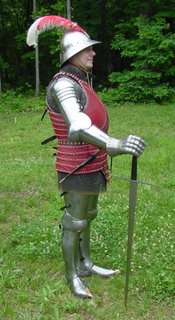
Here.
John Scalzi apples the Mallet of Loving Admonishment
Sunday, January 31, 2010

Saturday, January 30, 2010
Amazon vs. Macmillan
Amazon.com Inc. has removed all e-book titles published by Macmillan off Amazon and its Kindle e-reader site, according to a statement issued by Macmillan late Saturday.
Macmillan CEO John Sargent said he visited Amazon on Thursday in Seattle to discuss "new terms of sales for e-books" and that by the time he returned to New York, he'd been informed that Macmillan's e-books would only be for sale on Amazon.com "through third parties," according to the statement, which appeared as an advertisement on publishing industry Web site PublishersMarketplace.com.
An Amazon spokesman didn't respond immediately to a request for comment regarding Mr. Sargent's statement.
Here is the Macmillan side of the story.
Here is an excellent blog post on the economics involved. Most people really don't understand how little of a popular book's price goes to cover its physical production.
Here is Charlie Stross on the subject.
Andrew Wheeler comments.
Here is John Scalzi on the subject.
Macmillan has proposed a model where ebooks start at up to $15 when first released in hardback and eventually drop to $6, and they get 70% of the retail price. This would approximate what they get from the wholesalers for physical books, minus the cost of production.
Amazon has been marketing many popular ebook titles at $9.99 even though it seems that their agreement with the major publishers gives them about half of the hardback price, or around $12.50. This is not sustainable.
One possibility is that Amazon is doing this as a massive act of altruism to the reading public.
Another is that they plan to destroy enough of the business of other distribution channels that they can make the money back later, either from the customers or publishers and authors, or both.
In the meantime, I suggest you take another look at Amazon's competition, because there are a lot of excellent authors that Amazon won't sell you at the moment.
And because we've just seen an example of why greater market share for Amazon might not be a good thing.
Friday, January 29, 2010
The Seneschal of Hainaut Performs a Deed of Arms in Valencia, 1407
In the year 1405, in the month of May, I left, with my lord the seneschal of Hainaut, to go to see the arms that he, my lord Jacques de Montenay, Tanguy du Chastel and Carmenien did at Valencia the great, before the king Martin of Aragon, against four other gentlemen of Aragon and Gascony; Pere de Moncada, Colombart de Santa-Coloma and two others. And the said arms would be until the whole body was born down or they had lost all their weapons.Which arms they did, taken while fighting with honor on both sides. [Et estoient lesdittes armes a etre portez jus de tout le corps ou avoir perdu tous ses bastons. Lesquelles armes furent prinses sus en combatant a l'onneur d'une partie er d'lautre]
Ghillebert de Lannoy Œuvres de Ghillebert de Lannoy, voyageur, diplomate et moraliste; Louvain 1878 p.13 Martín de Riquer reports that according to Aragonese documents the combat happened on May 30 of 1407.
Ghillebert de Lannoy Œuvres de Ghillebert de Lannoy, voyageur, diplomate et moraliste; Louvain 1878 p.13 Martín de Riquer reports that according to Aragonese documents the combat happened on May 30 of 1407.
Wednesday, January 27, 2010
"They shouldn't put their caps on back to front."

So says Nadine Morano, French Deputy Minister for Family Affairs, speaking of those some see as a threat to French cultural identity.
Tuesday, January 26, 2010
Combat between Sir John Anneslie and Thomas Katrington, squire, 1380
On the seuenth of Iune,A comb [...] [...]twixt [...] A [...] Thoma [...] [...]tring [...]. a combat was fought afore the kings palace at Westminster, on the pauement there, betwixt one sir Iohn Anneslie knight, and one Thomas Katrington esquier: the occasion of which strange and notable triall rose hereof. The knight ac|cused the esquier of treason, for that where the for|tresse of saint Sauiour within the Ile of Constan|tine in Normandie, belonging som [...]time to sir Iohn Chandois, had béene committed to the said Katring|ton, as capteine the [...] [...]o keepe it against the eni|mies, he had for [...] and deliuered it ouer to the Frenchmen, where he was sufficientlie proui|ded of men, munition and vittels, to haue defended it against them; and sith the inheritance of that fortresse and landes belonging thereto, had apperteined to the said Anneslie in right of his wife, as neerest cousine by affinitie vnto sir Iohn Chandois, if by the false conueiance of the said Katrington, it had not béene made awaie, and alienated into the enimies hands: he offered therefore to trie the quarrell by combat, a|gainst the said Katrington, whervpon was the same Katrington apprehended, and put in prison, but short|lie after set at libertie againe.
Whilest the duke of Lancaster, during the time that his father king Edward laie in his last sicke|nesse, did in all things what liked him, & so at the con|templation of the lord Latimer (as was thought) he released Katrington for the time, so that sir Iohn An|neslie could not come to the effect of his sute in all the meane time, till now. Such as feared to be char|ged with the like offenses staied the matter, till at length, by the opinion of true and ancient knights it was defined,that for such a forren controuersie that had not risen within the limits of the realme, but tou|ched possession of things on the further side the sea, it was lawfull to haue it tried by battell, if the cause were first notified to the constable and marshall of the realme, and that the combat was accepted by the parties. Herevpon was the day and place appointed, and all things prouided readie, with lists railed and made so substantiallie, as if the same should haue in|dured for euer. The concourse of people that came to London to sée this tried, was thought to excéed that of the kings coronation, so desirous men were to be|hold a sight so strange and vnaccustomed.
The king, his nobles, and all the people being come togither in the morning of the daie appointed, to the place where the lists were set vp, the knight be|ing armed and mounted on a faire courser seemelie trapped, entered first as appellant, staieng till his ad|uersarie the defendant should come. And shortlie af|ter was the esquier called to defend his cause in this forme: Thomas Katrington defendant, come and appeare to saue the action, for which sir Iohn Annes|lie knight and appellant hath publikelie and by wri|ting appealed thée. He being thus called thrise by an herald at armes, at the third call did come ar|med likewise; and riding on a courser trapped with traps imbrodered with his armes, at his approching to the lists he alighted from his horsse, lest according to the law of armes the constable should haue cha|lenged the horsse if he had entered within the lists. But his shifting nothing auailed him, for the horsse after his maister was alighted beside him, ran vp & downe by the railes, now thrusting his head ouer, and now both head & breast,The earle Bucking [...] claimeth [...] horsse. so that the earle of Buc|kingham, bicause he was high constable of Eng|land, claimed the horsse afterwards, swearing that he would haue so much of him as had appeared ouer the railes, and so the horsse was adiudged vnto him.
But now to the matter of the combat (for this challenge of the horsse was made after, as soone as the esquier was come within the lists) the indenture was brought foorth by the marshall and constable, which had béene made and sealed before them, with consent of the parties, in which were conteined the articles exhibited by the knight against the esquier, and there the same was read before all the assemblie. The esquier (whose conscience was thought not to be cleare, but rather guiltie, and therefore seemed full of troublesome and grudging passions, as an offendor alreadie conuinced, thought (as full well he might)Multamiser timeo, quia feci multa proteruè)
went about to make exceptions, that his cause by some means might haue séemed the sounder. But the duke of Lancaster hearing him so staie at the mat|ter, sware, that except according to the conditions of the combat, and the law of armes, he would admit all things in the indentures comprised, that were not made without his owne consent, he should as guiltie of the treason foorthwith be had foorth to execution. The duke with those words woone great commenda|tion, and auoided no small suspicion that had béene conceiued of him as parciall in the esquiers cause. The esquier hearing this, said, that he durst fight with the knight, not onelie in those points, but in all other in the world whatsoeuer the same might be: for he trusted more to his strength of bodie, and fauour of his freends, than to the cause which he had taken vpon him to defend. He was in déed a mightie man of stature, where the knight among those that were of a meane stature was one of the least. Freends to the esquier, in whom he had great affiance to be borne [...]ut through their assistance, were the lords Latimer and Basset, with others.
Before they entered battell, they tooke an oth, as well the knight as the esquier, that the cause in which they were to fight, was true, and that they delt with no witchcraft, nor art magike, whereby they might obteine the victorie of their aduersarie, nor had about them any herbe or stone, or other kind of experiment with which magicians vse to triumph ouer their eni|mies. This oth receiued of either of them, and there|with hauing made their praiers deuoutlie, they be|gan the battell, first with speares, after with swords, and lastlie with daggers.The esquire [...] ouer|throwne. They fought long, till final|lie the knight had bereft the esquier of all his wea|pons, and at length the esquier was manfullie o|uerthrowne by the knight. But as the knight would haue fallen vpon the esquier, through sweat that ran downe by his helmet his sight was hindered, so that thinking to fall vpon the esquier, he fell downe sideling himselfe, not comming néere to the esquier, who perceiuing what had happened, although he was almost ouercome with long fighting, made to the knight, and threw himselfe vpon him, so that manie thought the knight should haue beene ouercome: other doubted not but that the knight would recouer his feet againe, and get the victorie of his aduersarie.
The king in the meane time caused it to be pro|clamed that they should staie, and that the knight should be raised vp from the ground, and so meant to take vp the matter betwixt them. To be short, such were sent as should take vp the esquier; but com|ming to the knight, he besought them, that it might please the king to permit them to lie still, for he thanked God he was well, and mistrusted not to ob|teine the victorie, if the esquier might be laid vpon him, in manner as he was earst. Finallie, when it would not be so granted, he was contented to be rai|sed vp, and was no sooner set on his féet, but he cheer|fullie went to the king, without anie mans helpe, where the esquier could neither stand nor go without the helpe of two men to hold him vp, and therefore was set in his chaire to take his ease, to see if he might recouer his strength.
The knight at his comming before the king, be|sought him & his nobles, to grant him so much, that he might be eftsoones laid on the ground as before, and the esquier to be laid aloft vpon him: for the knight perceiued that the esquire through excessiue heat, and the weight of his armor, did maruellouslie faint, so as his spirits were in manner taken from him. The king and the nobles perceiuing the knight so couragiouslie to demand to trie the battell foorth to the vttermost, offring great summes of monie, that so it might be doone, decreed that they should be resto|red againe to the same plight in which they laie when they were raised vp: but in the meane time the es|quire fainting, and falling downe in a swoone, fell out of his chaire,The esquier fainteth. as one that was like to yéeld vp his last breath presentlie among them. Those that stood about him cast wine and water vpon him, seeking so to bring him againe, but all would not serue, till they had plucked off his armor, & his whole apparell,The knight is iudged the vanquisher. which thing prooued the knight to be vanquisher, and the es|quier to be vanquished.
After a little time the esquier began to come to himselfe, and lifting vp his eies, began to hold vp his head, and to cast a ghostlie looke on euerie one a|bout him: which when it was reported to the knight, he commeth to him armed as he was (for he had put off no péece since the beginning of the fight) and spea|king to him, called him traitor, and false periured man, asking of him if he durst trie the battell with him againe: but the esquier hauing neither sense nor spirit whereby to make answer, proclamation was made that the battell was ended, and euerie one might go to his lodging. The esquier immediat|lie after he was brought to his lodging, and laid in bed, began to wax raging wood, and so continuing still out of his wits, about nine of the clocke the next day he yéelded vp the ghost. ¶ This combat was fought (as before yée haue heard) the seuenth of Iune to the great reioising of the common people, and dis|couragement of traitours.
Raphael Holinshed Chronicles of England, Scotland, and Ireland London, 1587 Volume 6, pp. 424-425
Holinshed closely follows Thomas Walsingham in this account.
Whilest the duke of Lancaster, during the time that his father king Edward laie in his last sicke|nesse, did in all things what liked him, & so at the con|templation of the lord Latimer (as was thought) he released Katrington for the time, so that sir Iohn An|neslie could not come to the effect of his sute in all the meane time, till now. Such as feared to be char|ged with the like offenses staied the matter, till at length, by the opinion of true and ancient knights it was defined,that for such a forren controuersie that had not risen within the limits of the realme, but tou|ched possession of things on the further side the sea, it was lawfull to haue it tried by battell, if the cause were first notified to the constable and marshall of the realme, and that the combat was accepted by the parties. Herevpon was the day and place appointed, and all things prouided readie, with lists railed and made so substantiallie, as if the same should haue in|dured for euer. The concourse of people that came to London to sée this tried, was thought to excéed that of the kings coronation, so desirous men were to be|hold a sight so strange and vnaccustomed.
The king, his nobles, and all the people being come togither in the morning of the daie appointed, to the place where the lists were set vp, the knight be|ing armed and mounted on a faire courser seemelie trapped, entered first as appellant, staieng till his ad|uersarie the defendant should come. And shortlie af|ter was the esquier called to defend his cause in this forme: Thomas Katrington defendant, come and appeare to saue the action, for which sir Iohn Annes|lie knight and appellant hath publikelie and by wri|ting appealed thée. He being thus called thrise by an herald at armes, at the third call did come ar|med likewise; and riding on a courser trapped with traps imbrodered with his armes, at his approching to the lists he alighted from his horsse, lest according to the law of armes the constable should haue cha|lenged the horsse if he had entered within the lists. But his shifting nothing auailed him, for the horsse after his maister was alighted beside him, ran vp & downe by the railes, now thrusting his head ouer, and now both head & breast,The earle Bucking [...] claimeth [...] horsse. so that the earle of Buc|kingham, bicause he was high constable of Eng|land, claimed the horsse afterwards, swearing that he would haue so much of him as had appeared ouer the railes, and so the horsse was adiudged vnto him.
But now to the matter of the combat (for this challenge of the horsse was made after, as soone as the esquier was come within the lists) the indenture was brought foorth by the marshall and constable, which had béene made and sealed before them, with consent of the parties, in which were conteined the articles exhibited by the knight against the esquier, and there the same was read before all the assemblie. The esquier (whose conscience was thought not to be cleare, but rather guiltie, and therefore seemed full of troublesome and grudging passions, as an offendor alreadie conuinced, thought (as full well he might)Multamiser timeo, quia feci multa proteruè)
went about to make exceptions, that his cause by some means might haue séemed the sounder. But the duke of Lancaster hearing him so staie at the mat|ter, sware, that except according to the conditions of the combat, and the law of armes, he would admit all things in the indentures comprised, that were not made without his owne consent, he should as guiltie of the treason foorthwith be had foorth to execution. The duke with those words woone great commenda|tion, and auoided no small suspicion that had béene conceiued of him as parciall in the esquiers cause. The esquier hearing this, said, that he durst fight with the knight, not onelie in those points, but in all other in the world whatsoeuer the same might be: for he trusted more to his strength of bodie, and fauour of his freends, than to the cause which he had taken vpon him to defend. He was in déed a mightie man of stature, where the knight among those that were of a meane stature was one of the least. Freends to the esquier, in whom he had great affiance to be borne [...]ut through their assistance, were the lords Latimer and Basset, with others.
Before they entered battell, they tooke an oth, as well the knight as the esquier, that the cause in which they were to fight, was true, and that they delt with no witchcraft, nor art magike, whereby they might obteine the victorie of their aduersarie, nor had about them any herbe or stone, or other kind of experiment with which magicians vse to triumph ouer their eni|mies. This oth receiued of either of them, and there|with hauing made their praiers deuoutlie, they be|gan the battell, first with speares, after with swords, and lastlie with daggers.The esquire [...] ouer|throwne. They fought long, till final|lie the knight had bereft the esquier of all his wea|pons, and at length the esquier was manfullie o|uerthrowne by the knight. But as the knight would haue fallen vpon the esquier, through sweat that ran downe by his helmet his sight was hindered, so that thinking to fall vpon the esquier, he fell downe sideling himselfe, not comming néere to the esquier, who perceiuing what had happened, although he was almost ouercome with long fighting, made to the knight, and threw himselfe vpon him, so that manie thought the knight should haue beene ouercome: other doubted not but that the knight would recouer his feet againe, and get the victorie of his aduersarie.
The king in the meane time caused it to be pro|clamed that they should staie, and that the knight should be raised vp from the ground, and so meant to take vp the matter betwixt them. To be short, such were sent as should take vp the esquier; but com|ming to the knight, he besought them, that it might please the king to permit them to lie still, for he thanked God he was well, and mistrusted not to ob|teine the victorie, if the esquier might be laid vpon him, in manner as he was earst. Finallie, when it would not be so granted, he was contented to be rai|sed vp, and was no sooner set on his féet, but he cheer|fullie went to the king, without anie mans helpe, where the esquier could neither stand nor go without the helpe of two men to hold him vp, and therefore was set in his chaire to take his ease, to see if he might recouer his strength.
The knight at his comming before the king, be|sought him & his nobles, to grant him so much, that he might be eftsoones laid on the ground as before, and the esquier to be laid aloft vpon him: for the knight perceiued that the esquire through excessiue heat, and the weight of his armor, did maruellouslie faint, so as his spirits were in manner taken from him. The king and the nobles perceiuing the knight so couragiouslie to demand to trie the battell foorth to the vttermost, offring great summes of monie, that so it might be doone, decreed that they should be resto|red againe to the same plight in which they laie when they were raised vp: but in the meane time the es|quire fainting, and falling downe in a swoone, fell out of his chaire,The esquier fainteth. as one that was like to yéeld vp his last breath presentlie among them. Those that stood about him cast wine and water vpon him, seeking so to bring him againe, but all would not serue, till they had plucked off his armor, & his whole apparell,The knight is iudged the vanquisher. which thing prooued the knight to be vanquisher, and the es|quier to be vanquished.
After a little time the esquier began to come to himselfe, and lifting vp his eies, began to hold vp his head, and to cast a ghostlie looke on euerie one a|bout him: which when it was reported to the knight, he commeth to him armed as he was (for he had put off no péece since the beginning of the fight) and spea|king to him, called him traitor, and false periured man, asking of him if he durst trie the battell with him againe: but the esquier hauing neither sense nor spirit whereby to make answer, proclamation was made that the battell was ended, and euerie one might go to his lodging. The esquier immediat|lie after he was brought to his lodging, and laid in bed, began to wax raging wood, and so continuing still out of his wits, about nine of the clocke the next day he yéelded vp the ghost. ¶ This combat was fought (as before yée haue heard) the seuenth of Iune to the great reioising of the common people, and dis|couragement of traitours.
Raphael Holinshed Chronicles of England, Scotland, and Ireland London, 1587 Volume 6, pp. 424-425
Holinshed closely follows Thomas Walsingham in this account.
Monday, January 25, 2010
The Seneschal of Hainault and His Companions Do Arms at Smithfield, 1410
In the x yere of King Henry the senescal of Henaud came to seke aventures yn England, and the Earl of Somerset answerid hym.
The next day an Henaud an Syr Richard of Arundek (sic) knight
The 3 day an Henaud and Syr John of Cornewall.
The 4. an Henaud, and Syr John Cheyney.
The 5. Day an Henaude, and John Stewarde Esquire.
The 6. Day an Henaud, and John Standisch Esquier.
Leland, Collectanea
And in the tenth year of King Harry's reign the IVth, come the seneschal of Hainault, with other men, into England, for to seek adventures, and to get him worship in deeds of arms, both on horseback and on foot, of all manner points of deeds of arms and war. And the seneschal challenged the earl of Somerset; and the earl delivered him manfully in all his challenges, and put his adversary to the worse in all points, and won him there great worship and degree of the field. And the next day come in to the field another man of arms of the seneschal's party; and against him come Sir Richard of Arundell, knight; and the Hainaulter had the better of him on foot in one point, for he brought him on his knee. And the third day come in another man of arms in to the field; and against him Sir John Cornwall, knight; and manly and knightly quit him in all manner of points against his adversary, and had the better in the field. And the fourth day come in another man of Hainault, in the field; and against him come Sir John Cheyney's son, and manly quit him against his adversary, for he cast both horse and man into the field; and the king for his manhood that time, dubbed him knight. And the fifth day there come another man of arms of Hainault's party into the field; and to him come John Stewarde, squire, and there manfully quit him in all manner of points, and had him the better. And the sixth day come another Hainaulter; and to him come William Porter, squire; and manfully he quit him in the field, and had the better, and became dubbed him knight the same time. And the seventh day come another Hainaulter into the field; and to him come John Standish, squire, and manly quit him on his adversary, and had the better in the field; and there the king dubbed him knight the same day. And in the same day came another Hainaulter; and to him came a squire of Gascony; and proudly and manly he quit him on his adversary, and there had the better, and anon the king dubbed him knight.
And the eighth day come into the field two men of arms of Hainault; and to them come two soldiers of Calais that were brethren, call the Boroughes; and well and manly quit them on their adversaries, and had the better in the field; and thus ended this challenged with much worship. And the king at the reuencens of the strangers, made a great feast, and gave great gifts; and they took their leave and went home into their country.
The Brut, or, The Chronicles of England ed. Friederich W. D. Brie, London, 1906
And this same year the seneschal of Hainault with other worthy men came into England to get worship in deeds of arms. And he challenged the earl of Somerset and he delivered him manfully in all his challenges and put them to the worse and had the field in all points. The second day came into the field a man of the seneschal's party, and against him came Sir Richard of Arundell, knight. And the Hainaulter had the better of him in one point, for he brought him on his knee. The third day came in another Hainaulter, and against him came Sir John Cornwall, knight, and had the better of his adversary in all points. The fourth day came in another Hainaulter, and to him came Sir John Cheney's son, and cast the Hainaulter down into the field, horse and man, wherefore the king made him knight. The fifth day came in another Hainaulter and to him came Sir John Stuarte, esquire, and had the better. The sixth day came in another Hainaulter, and to him came William Porter, esquire, and had the better in the field, and the king made him knight. The seventh day came in another Hainaulter, and to him came John Standish, esquire, and had the better in the field wherefor the king made him knight. And that same day come in another Hainaulter, and to him came a squire of Gascony and had the better, and the king made him a knight.The eighth day came in two men of arms of Hainault, and to them came two soldiers of Calais that were brethren, that were called the Burghes, and quit them well and manly in the field, and had the better. And thus ended the challenges in Smithfield with much worship.
An English chronicle 1377 - 1461 : a new edition ; edited from Aberystwyth, National Library of Wales MS 21068 and Oxford, Bodleian Library MS Lyell 34 ed. C. William Marx, Woodbridge 2003
The next day an Henaud an Syr Richard of Arundek (sic) knight
The 3 day an Henaud and Syr John of Cornewall.
The 4. an Henaud, and Syr John Cheyney.
The 5. Day an Henaude, and John Stewarde Esquire.
The 6. Day an Henaud, and John Standisch Esquier.
Leland, Collectanea
And in the tenth year of King Harry's reign the IVth, come the seneschal of Hainault, with other men, into England, for to seek adventures, and to get him worship in deeds of arms, both on horseback and on foot, of all manner points of deeds of arms and war. And the seneschal challenged the earl of Somerset; and the earl delivered him manfully in all his challenges, and put his adversary to the worse in all points, and won him there great worship and degree of the field. And the next day come in to the field another man of arms of the seneschal's party; and against him come Sir Richard of Arundell, knight; and the Hainaulter had the better of him on foot in one point, for he brought him on his knee. And the third day come in another man of arms in to the field; and against him Sir John Cornwall, knight; and manly and knightly quit him in all manner of points against his adversary, and had the better in the field. And the fourth day come in another man of Hainault, in the field; and against him come Sir John Cheyney's son, and manly quit him against his adversary, for he cast both horse and man into the field; and the king for his manhood that time, dubbed him knight. And the fifth day there come another man of arms of Hainault's party into the field; and to him come John Stewarde, squire, and there manfully quit him in all manner of points, and had him the better. And the sixth day come another Hainaulter; and to him come William Porter, squire; and manfully he quit him in the field, and had the better, and became dubbed him knight the same time. And the seventh day come another Hainaulter into the field; and to him come John Standish, squire, and manly quit him on his adversary, and had the better in the field; and there the king dubbed him knight the same day. And in the same day came another Hainaulter; and to him came a squire of Gascony; and proudly and manly he quit him on his adversary, and there had the better, and anon the king dubbed him knight.
And the eighth day come into the field two men of arms of Hainault; and to them come two soldiers of Calais that were brethren, call the Boroughes; and well and manly quit them on their adversaries, and had the better in the field; and thus ended this challenged with much worship. And the king at the reuencens of the strangers, made a great feast, and gave great gifts; and they took their leave and went home into their country.
The Brut, or, The Chronicles of England ed. Friederich W. D. Brie, London, 1906
And this same year the seneschal of Hainault with other worthy men came into England to get worship in deeds of arms. And he challenged the earl of Somerset and he delivered him manfully in all his challenges and put them to the worse and had the field in all points. The second day came into the field a man of the seneschal's party, and against him came Sir Richard of Arundell, knight. And the Hainaulter had the better of him in one point, for he brought him on his knee. The third day came in another Hainaulter, and against him came Sir John Cornwall, knight, and had the better of his adversary in all points. The fourth day came in another Hainaulter, and to him came Sir John Cheney's son, and cast the Hainaulter down into the field, horse and man, wherefore the king made him knight. The fifth day came in another Hainaulter and to him came Sir John Stuarte, esquire, and had the better. The sixth day came in another Hainaulter, and to him came William Porter, esquire, and had the better in the field, and the king made him knight. The seventh day came in another Hainaulter, and to him came John Standish, esquire, and had the better in the field wherefor the king made him knight. And that same day come in another Hainaulter, and to him came a squire of Gascony and had the better, and the king made him a knight.The eighth day came in two men of arms of Hainault, and to them came two soldiers of Calais that were brethren, that were called the Burghes, and quit them well and manly in the field, and had the better. And thus ended the challenges in Smithfield with much worship.
An English chronicle 1377 - 1461 : a new edition ; edited from Aberystwyth, National Library of Wales MS 21068 and Oxford, Bodleian Library MS Lyell 34 ed. C. William Marx, Woodbridge 2003
Sunday, January 24, 2010
Favorite Day to Start a 14th Century Tournament
Monday! Monday! Monday! At the Smithfield Tiltways! Monday! Monday! Monday! Massive oat-fueled destriers! Monday! Monday! Monday!
In the second half of the 14th century, this list of deeds of arms includes
1359: Joust in London: Monday-Wednesday (three rogation days)
1388: Hastilude at Calais: including combat on Sunday
1389: Hastiludes in Paris: Monday-Wednesday
1389: Jousts at the Entrance of Queen Isabella into Paris: Tuesday-Thursday
1390: Jousts at St. Inglevert: Sundays and feast days excluded from jousting
1390: Jousts at Smithfield: Monday-Tuesday
In addition, these jousts were scheduled for Monday-Tuesday.
Earlier, David Crouch's Tournament reports:
In the second half of the 14th century, this list of deeds of arms includes
1359: Joust in London: Monday-Wednesday (three rogation days)
1388: Hastilude at Calais: including combat on Sunday
1389: Hastiludes in Paris: Monday-Wednesday
1389: Jousts at the Entrance of Queen Isabella into Paris: Tuesday-Thursday
1390: Jousts at St. Inglevert: Sundays and feast days excluded from jousting
1390: Jousts at Smithfield: Monday-Tuesday
In addition, these jousts were scheduled for Monday-Tuesday.
Earlier, David Crouch's Tournament reports:
While there seems to have been a consistent effort to avoid combat on Sunday, the 1388 hastiludes at Calais provide at least one exception.
In the biggest sample of dated tournaments that we have -- the 57 listed as forbidden by the king and his ministers in England between 1216 and 1250 -- 25 had been arranged for a Monday. In noble tournaments held in the Low Countries in the first half of the fourteenth century, Monday and Tuesday were still the days chosen for half of the recorded tournaments.
Saturday, January 23, 2010
The Invisible College: Bigger and Better
The Invisible College was an informal intellectual enterprise of the 17th century. Robert Boyle described it in a letter to Francis Tallents:
And now there's a great Unseen University where Steve Muhlberger and I can discuss what desconfit meant in middle French in the Uncommon Room, with an entrance in Pennsylvania and an entrance in Ontario. That makes me happy.
Also, this blog recently passed 50,000 visits, not counting those who read it by feed.
Ook.
...and yet, though ambitious to lead the way to any generous design, of so humble and teachable a genius, as they disdain not to be directed to the meanest, so he can plead reason for his opinion; persons that endeavour to put narrow-mindedness out of countenance, by the practice of so extensive a charity that it reaches unto every thing called man, and nothing less than an universal goodwill can content it. And, indeed, they are so apprehensive of the want of good employment, that they take the whole body of mankind for their care.
And now there's a great Unseen University where Steve Muhlberger and I can discuss what desconfit meant in middle French in the Uncommon Room, with an entrance in Pennsylvania and an entrance in Ontario. That makes me happy.
Also, this blog recently passed 50,000 visits, not counting those who read it by feed.
Ook.
Subscribe to:
Posts (Atom)