Sunday, October 31, 2010

A 15th Century Targe at the Met

Wood, leather, gesso, silver foil, polychrome. Probably Austrian, early 15th century.


The knot of a cord to support the shield is visible on the front, as well as the holes where a boss probably once covered it.


The top rear of the shield. A layer of leather glued to the front of the shield wraps around to cover the edge and the very outer edge of the back, about one inch in from the edge. Neat triangular slices were cut from the leather where it wrapped around to the rear of the shield so that it lay flat without folds or overlap, the edges where the material was removed meeting in butt joins. Another layer of leather was glued over this, covering the back of the shield almost to the edge.


Damage to the edge of the shield, with the wood pushed back between two converging cuts or slits. A glancing blow from a square or diamond sectioned lance tip might have done this, or one of the points of a coronel.


Two rings, secured to the bottom rear of the shield by staples. A cord for the bridle arm to pass through might have been tied to these.


The staples seen from the front.

More information on shield construction has been updated here.

Saturday, October 30, 2010

Awesome DIY Halloween Costumes

From the DIY Halloween costume thread at Boing Boing:


Jawa

AT-ST walker, perfect for chasing your younger siblings in their Ewok suits. All evening.
Minotaur Mask
William Shakespeare and His Dog

Monday, October 25, 2010

On St. Crispin's Day

My favorite post on the battle of Agincourt from 2007, with added links to my other posts on the subject.

Saturday, October 23, 2010

Bread: The Practical Applications. Part 1: Buying from a Baker

Suppose you wish to find the legal price of bread at a particular date in medieval England.

Below I have converted the Assize of Bread regulations into a more convenient form. The first column is the price of wheat in shillings per bushel. This is how those prices are expressed in Gregory Clark's data series. Multiply by eight if you want the price per quarter of wheat, which is how wheat prices are expressed in the regulations, and very frequently in medieval sources.

The second is the legal weight for a farthing loaf of fine white wastel bread in ounces avoirdupois when wheat sells at the preceding price. In the regulations they are expressed in tower pounds.

0.250 56.0
0.313 42.0
0.375 29.6
0.438 25.9
0.500 22.2
0.563 18.5
0.625 16.8
0.688 15.2
0.750 14.0
0.813 12.9
0.875 11.8
0.938 11.2
1.000 10.5
1.063 9.9
1.125 9.3
1.188 8.9
1.250 8.4
1.313 8.0
1.375 7.6
1.438 7.3
1.500 7.0
1.563 6.7
1.625 6.5
1.688 6.2
1.750 6.0
1.813 5.7
1.875 5.6
1.938 5.4
2.000 5.2
2.063 5.1
2.125 4.9
2.188 4.8
2.250 4.7
2.313 4.5
2.375 4.4
2.438 4.3
2.500 4.2

We also have different grades of bread, expressed in the weight of a farthing loaf relative to wastel.

Pain-demeine/payne demayne 0.98
Simnel/symnell (boiled and clean) 0.99
Wastel/wastell 1.00
First cocket (same grain and bolting as wastel) 1.01
Cocket of corn of lesser price 1.04
Clean wheat/wheten/whetebred 1.56
Treat:/Panis Bisus 2.00
Loaf of all corns of a quatern 2.07

Simnel, wastel and first cocket seem to have differed in the moistness of the loaf rather than the fineness or quality of the flour. Manchet seems to have been a similar grade. The royal assize regulations do not mention pain-demeine, but York's put it a bit finer than wastel.

Treat, just one step up from the lowest grade of wheat bread, is easy to remember at half the price per pound of wastel.

So in 1388, when grain was relatively cheap at .425 shillings/bushel, wastel farthing loaves should have weighed 26 oz., wheaten bread 40, and a coarse loaf of unsifted flour 54.

But an adult living in that year would remember the bad year of 1381, when farthing wastel weighed 14 oz., wheaten 22. and even the loaf from unbolted flour only 29.

Memorandum Book of York, 1411-1412 in Archaeological review. A journal of historic and pre-historic antiquities. 1900. London: D. Nutt. Vol 1. P 130

Friday, October 22, 2010

Afterlife. Well Spent.


Sears reaches out to the underserved unliving demographic.

Mmmm. Tentacles.


The beautiful and strange Cirrate Octopus
This lovely orange Cirrate octopus appears to be the long-lost love child of a sock puppet and a dance recital costume.

and:

Tentacle Pot Pie
Octopus Made from Typewriter Parts
Adorable Squid Suit made for Lucy Knisly

Sunday, October 17, 2010

Separate Hose, Full Length in Back

This illumination by Fouquet shows some useful details on the figure on the far left, including the location of the seam. Only one of the tails has points hanging from it, suggesting that a common lace ties up both tails.
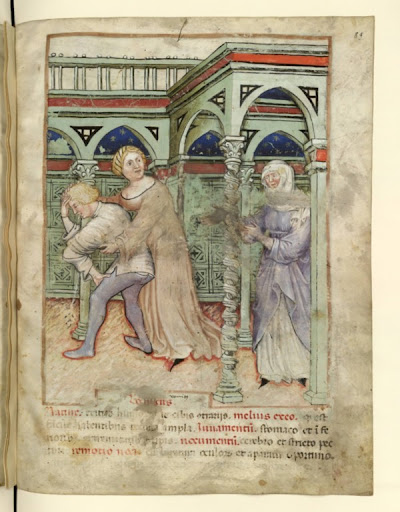
The Vienna Tacuinum Sanitatis shows an earlier example of a similar cut.

Another image of vomiting from the Tacuinum Sanitatis shows how 14th or early 15th c. full length hose is significantly shorter and attaches lower than full length hose from later in the 15th century.

The Burial of the Wood, c. 1466 shows a partial lining and other details. Take advantage of the magnification function to appreciate the details.

Here is an article with a pattern for extant hose from 1490-1535. Joined hose, but a reasonable starting point for understanding the separate hose that is full length in back.

Here is synopsis of an article on hose from Alpirsbach, also shown in the article above. There are also patterns for stockings and a doublet: note the internal waistband for pointing hose to. Here is another article on the hose. Here is a commercial pattern based on the hose. Here is another photograph.

These panzerhose are probably similar in cut to civilian hose.

See also this gallery of hose images.

Tuesday, October 12, 2010

Harrison on Bread

Of bread made of wheat we have sundry sorts daily brought to the table, whereof the first and most excellent is the manchet, which we commonly call white bread, in Latin primarius panis, whereof Budeus also speaketh, in his first book De asse; and our good workmen deliver commonly such proportion that of the flour of one bushel with another they make forty cast of manchet, of which every loaf weigheth eight ounces into the oven, and six ounces out, as I have been informed. The second is the cheat or wheaten bread, so named because the colour thereof resembleth the grey or yellowish wheat, being clean and well dressed, and out of this is the coarsest of the bran (usually called gurgeons or pollard) taken. The ravelled is a kind of cheat bread also, but it retaineth more of the gross, and less of the pure substance of the wheat; and this, being more slightly wrought up, is used in the halls of the nobility and gentry only, whereas the other either is or should be baked in cities and good towns of an appointed size (according to such price as the corn doth bear), and by a statute provided by King John in that behalf. The ravelled cheat therefore is generally so made that out of one bushel of meal, after two and twenty pounds of bran be sifted and taken from it (whereunto they add the gurgeons that rise from the manchet), they make thirty cast, every loaf weighing eighteen ounces into the oven, and sixteen ounces out; and, beside this, they so handle the matter that to every bushel of meal they add only two and twenty, or three and twenty, pound of water, washing also (in some houses) their corn before it go to the mill, whereby their manchet bread is more excellent in colour, and pleasing to the eye, than otherwise it would be. The next sort is named brown bread, of the colour of which we have two sorts one baked up as it cometh from the mill, so that neither the bran nor the flour are any whit diminished; this, Celsus called autopirus panis, lib. 2, and putteth it in the second place of nourishment. The other hath little or no flour left therein at all, howbeit he calleth it Panem Cibarium, and it is not only the worst and weakest of all the other sorts, but also appointed in old time for servants, slaves, and the inferior kind of people to feed upon. Hereunto likewise, because it is dry and brickle in the working (for it will hardly be made up handsomely into loaves), some add a portion of rye meal in our time, whereby the rough dryness or dry roughness thereof is somewhat qualified, and then it is named miscelin, that is, bread made of mingled corn, albeit that divers do sow or mingle wheat and rye of set purpose at the mill, or before it come there, and sell the same at the markets under the aforesaid name.

Original spelling:

Of bread made of wheat we haue sundrie sorts, dailie brought to the table, whereof the first and most excellent is the mainchet, which we commonlie call white bread, in Latine Primarius panis, wherof Budeus also speaketh, in his first booke De asse, and our good primarim paworkemen deliuer commonlie such proportion, that of the flower of one bushell with another they make fortie cast of manchet, of which euerie lofe weigheth eight ounces into the ouen and six ounces out, as I haue bene informed. The second is the cheat or wheaton bread, cheat bread, so named bicause the colour therof resembleth the graie or yellowish wheat, being cleane and well dressed, and out of this is the coursest of the bran (vsuallie called gurgeons or pollard) taken. The raueled is a kind of cheat bread also, but it reteineth more of the grosse, and lesse of the pure substance of the wheat: and this being more sleightlie wrought vp, is vsed in the halles of the nobilitie, and gentrie onelie, whereas the other either is or should be baked in cities & good townes of an appointed size (according to such price as the corne dooth beare) and by a statute prouided by king Iohn in that behalfe. The raueled cheat therfore is generallie so made that out of one bushell of meale, after two and twentie pounds of bran be sifted and taken from it (vvherevnto they ad the gurgeons that rise from the manchet) they make thirtie cast, euerie lofe weighing eighteene ounces into the ouen and sixteene ounces out: and beside this they so handle the matter that to euerie bushell of meale they ad onelie two and twentie or three and twentie pound of water, washing also in some houses Browne bread, there corne before it go to the mill, whereby their manchet bread is more excellent in colour and pleasing to the eie, than otherwise it would be. The next sort is named browne bread of the colour, of which we haue two sorts, one baked vp as it cometh from the mill, so that neither the bran nor the floure are anie whit diminished, this Celsus called Autopirus panis, lib. 2. and putteth it in the second place of nourishment. The other hath little or no floure left therein at all, howbeit he calleth it Panem Cibarium, and it is not onlie the woorst and weakest of all the other sorts, but also appointed in old time for seruants, slaues, and the inferiour kind of people to feed vpon. Ilerevnto likewise, bicause it is drie and brickie in the working (for it will hardlie be made vp handsomelie into loaues) some adde a portion of rie meale in our time, whereby the rough drinesse or drie roughnes therof is somwhat qualified, & then it is named miscelin, that is, bread made of mingled corne albeit that diuerse doo sow or mingle wheat & rie of set purpose at the mill, or before it come there, and sell the same at the markets vnder the aforesaid name.


William Harrison's Description of England in Holinshed's Chronicles

Value Added in Making Medieval Bread

A.d. 1497 (12 Henry VII)

As the Book of Assize declareth, when the best wheat was sold at 7s., the second at 6s. 6d., and the third at 6s. the quarter, the baker was allowed, for furnace and wood, 6d.; the miller, 4d.; two journeymen and his apprentices, 5d.; salt, yeast, candles, and sackbands, 2d.; himself, his horse, his wife, his dog, and his cat, 7d.; and the bran to his advantage.


In the early 19th century, the value of the bran bolted from a quarter of wheat amounted to 6-8% of the value of the wheat.

Sunday, October 10, 2010

Making Bread: an Error in The Great Household

The Assize of Bread, a complicated system of regulated English bread prices, begun by Henry III in the 13th c., lasted into the 19th, by which time the drawbacks of the system were becoming increasingly apparent.

In 1812-13, Parliament looked into the issue, calling a series of bakers and millers as witnesses. Their inquiry tells us a lot about breadmaking at the time, when the technology was much closer to medieval than the industrialized processes of today.

According to the witnesses:

A bushel of wheat weighed about 58 lbs. but could be a bit more or less depending on the dryness of the year.

A bushel of wheat yielded about 35-47 lbs of flour suitable for making bread, depending on the fineness desired, with about a pound and a half lost in the grinding. A bushel yielded 35-37 lbs of fine white flour, 38-43 lbs of flour suitable for less fine standard wheaten bread, or 43-47 lbs of flour for household bread. The process also produced 16-10 lbs of bran for animal feed, with the finest flour leaving the most bran. The remainder, if any, was coarser flour called thirds or middlings. Unmixed, this could be used for sizing, fed to hogs, or used to make very inferior bread. Mixed with better flour, it was used to make ship's biscuits and bread for the poor.

A 280 pound sack of flour yielded 347 lbs of bread after baking into quatern loaves, or 1.24 pounds of bread per pound of flour. A baker added water, yeast and salt, and not all of the water was lost in baking. Smaller loaves produced less bread per pound of flour because they lost more weight in baking.

Woolgar's The Great Household in Late medieval England calculates that at the not uncommon medieval household rate of 35 loaves a bushel, a bushel would provide .98 lbs of flour per loaf and .79 lbs after baking.

The amount of flour produced per bushel seems low: would the entire household consume loaves that were premium products by early 19th c. standards? And the ratio of flour weight to baked weight seems to be backwards. If early 19th c. bakers could get more than a pound of bread from a pound of flour, why should we think that their ancestors did much worse?